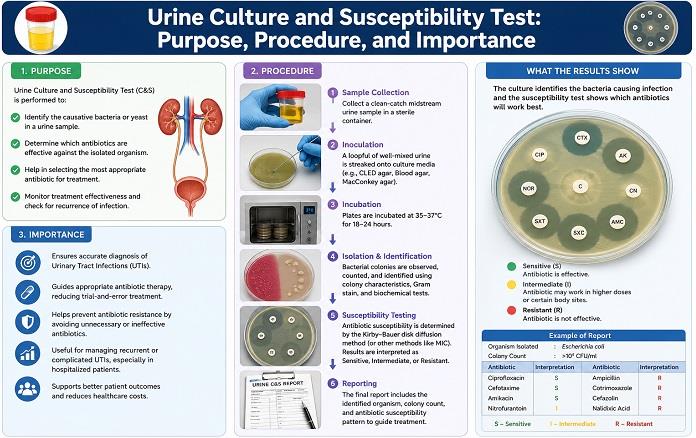
Urine Culture and Susceptibility Test
Urinary tract infections (UTIs) are among the most common bacterial infections, affecting people of all ages. Symptoms like burning during urination, frequent urges to urinate, lower abdominal pain, or cloudy urine can often point toward an infection. But identifying the exact cause requires more than just symptoms alone. This is where the Urine Culture and Susceptibility Test becomes important.
The test helps detect bacteria or fungi present in the urine and identifies which antibiotics are most effective for treatment. It plays a crucial role in accurate diagnosis and targeted infection management.
What Is a Urine Culture and Susceptibility Test?
A Urine Culture and Susceptibility Test is a laboratory test used to:
- Detect microorganisms causing urinary tract infections
- Identify the type of bacteria or fungus present
- Determine which antibiotics can effectively treat the infection
The “culture” part of the test checks whether harmful microorganisms grow in the urine sample. The “susceptibility” part evaluates how sensitive those organisms are to different antibiotics.
This helps doctors prescribe the most effective treatment instead of relying on trial-and-error medication.
Why Is This Test Done?
Doctors may recommend this test when someone experiences symptoms of a urinary tract infection or when a previous infection does not improve with treatment. Common reasons include:
- Burning sensation during urination
- Frequent urination
- Fever with urinary symptoms
- Lower abdominal or back pain
- Cloudy or foul-smelling urine
- Recurrent UTIs
- Monitoring treatment effectiveness
The test is also commonly advised for pregnant women, elderly individuals, and patients with weakened immunity, as untreated UTIs can lead to complications.