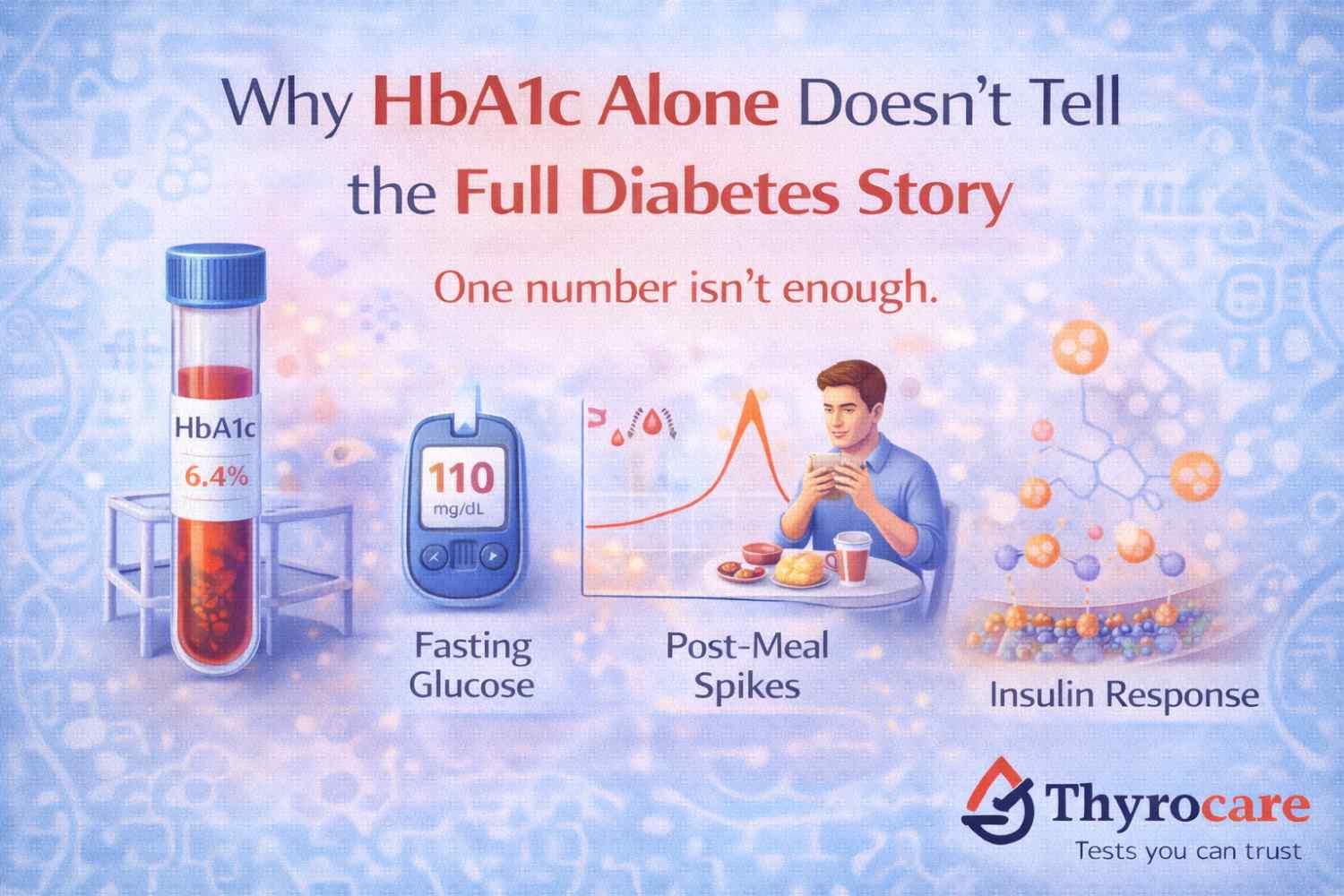
Why HbA1c Alone Doesn’t Tell the Full Diabetes Story
HbA1c is one of the most widely used tests to assess long-term blood sugar control. It reflects the average glucose level over the past two to three months and plays a central role in diagnosing and monitoring diabetes. However, while HbA1c is valuable, relying on it alone can sometimes miss important details about how the body is truly managing glucose.
Understanding diabetes requires looking beyond a single number.
What HbA1c Actually Measures
HbA1c measures the percentage of hemoglobin coated with glucose. Because red blood cells live for about three months, the test provides an average of blood sugar levels during that period.
The key word here is average.
An average does not show daily fluctuations, sudden spikes, or periods of low glucose. It smooths out highs and lows into one consolidated value.
Why Averages Can Be Misleading
Two individuals can have the same HbA1c result but very different glucose patterns.
For example:
- One person may have stable, moderately elevated glucose.
- Another may have frequent sharp spikes followed by sudden drops.
Both could produce a similar HbA1c result, yet their metabolic stress levels may differ significantly.
This is why context matters.
The Role of Fasting Glucose
Fasting glucose measures blood sugar at a specific point in time after several hours without food. It reflects how well the body regulates glucose overnight and in a resting state.
Sometimes HbA1c may appear near-normal while fasting glucose trends upward. This can signal early metabolic imbalance that requires attention.
Post-Meal Spikes Often Go Unnoticed
After meals, blood sugar naturally rises. However, exaggerated post-meal spikes may indicate insulin resistance or impaired glucose handling.
HbA1c does not reveal how high these spikes reach or how quickly glucose returns to baseline. Repeated post-meal surges can increase metabolic strain even if the overall average remains acceptable.
Insulin Response: The Hidden Factor
Insulin resistance often develops before sustained glucose elevation appears. During this stage, the body compensates by producing more insulin to maintain near-normal sugar levels.
HbA1c may remain within range, yet insulin levels may be elevated—signaling early metabolic dysfunction.
By the time HbA1c rises significantly, insulin resistance may already be well established.
Why Comprehensive Monitoring Matters
Evaluating fasting glucose, HbA1c, lipid patterns, and metabolic markers together provides a clearer picture than relying on HbA1c alone. Monitoring trends over time strengthens diagnostic insight and supports preventive action.
Diabetes is a dynamic metabolic condition, not a single-number diagnosis.
Preventive Monitoring with Thyrocare
Thyrocare offers comprehensive blood testing that evaluates fasting glucose, HbA1c, and related metabolic indicators. When you book a Thyrocare blood test through BookMyTest, professional home sample collection ensures convenience, and digital reports are delivered within 24 to 48 hours, supporting accurate and timely evaluation.
Routine screening helps detect patterns before long-term complications develop.
Conclusion
HbA1c remains an important tool in diabetes care—but it does not tell the entire story. Fasting glucose levels, post-meal spikes, and insulin response all influence metabolic health. Looking beyond one number provides deeper understanding, supports early intervention, and promotes long-term stability.
FAQs
Is HbA1c enough to diagnose diabetes?
HbA1c is important, but doctors may also evaluate fasting glucose and other markers in a Thyrocare blood test for complete assessment.
Can HbA1c be normal while glucose spikes occur?
Yes. Post-meal spikes may not significantly alter the overall HbA1c average.
What tests should be done along with HbA1c?
Fasting glucose and metabolic indicators included in a Thyrocare blood test help provide broader insight.
Is Thyrocare home sample collection available for diabetes screening?
Yes. Thyrocare home sample collection is available when booking preventive tests through BookMyTest.
How soon are Thyrocare blood test reports delivered?
Most Thyrocare blood test reports are delivered digitally within 24 to 48 hours.