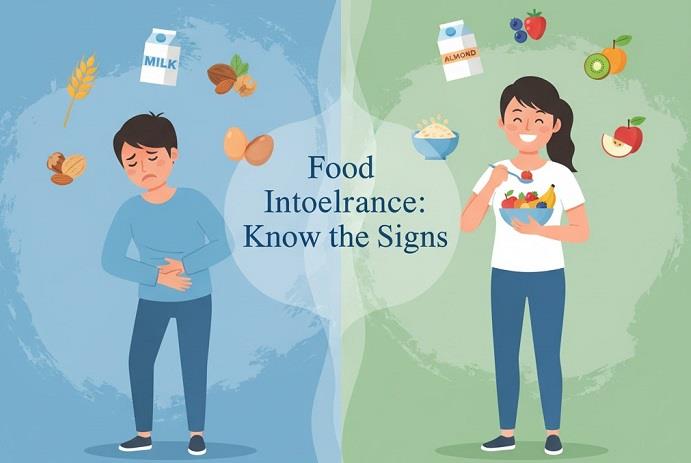
Understanding Food Intolerance: Symptoms, Causes & When to Get Tested
Let’s be honest — few things are more confusing than eating something “normal” and then spending the next few hours wondering why your stomach feels heavy, why your skin is acting up, or why your energy suddenly drops. And the weird part? It’s rarely obvious which food caused it. You just know something isn’t right.
That’s where food intolerance comes in. It’s not dramatic like an allergy. No swelling, no emergency. It’s quieter. Slower. But it can affect your daily life in very real ways.
What exactly is food intolerance?
Think of your digestive system as a processing unit. Every food that goes in needs the right enzymes, the right gut bacteria, and a smooth functioning system to break it down.
But when your body can’t properly digest a certain food, it reacts. Not violently — just uncomfortably.
That reaction is called food intolerance. It’s a digestive issue, not an immune system attack (that’s an allergy). This is why the symptoms show up gradually, sometimes even hours after eating.
Common symptoms you might notice
Food intolerance doesn’t look dramatic, but it shows up in ways that slowly chip away at your comfort:
- Bloating or gas after meals
- Stomach cramps
- Indigestion
- Nausea
- Headaches
- Fatigue
- Skin breakouts or rashes
- Brain fog or difficulty focusing
The tricky part? These symptoms can appear long after you’ve eaten, making it hard to connect the dots.
Common trigger foods
While everyone’s body is different, certain foods tend to cause trouble for many people:
- Dairy (lactose)
- Wheat & gluten
- Eggs
- Soy
- Nuts
- Seafood
- Fermented foods
- Artificial colors and preservatives
- Certain fruits, especially citrus
- High-fat or fried foods
Sometimes the trigger is something unexpected — like mushrooms, bananas, or vinegar.
Why does food intolerance occur?
There’s no single reason. It’s usually a mix of factors:
1. Enzyme deficiency: Your body may lack the enzymes needed to break down certain foods. The most common example is lactose intolerance.
2. Gut imbalance: Your gut bacteria play a huge role in digestion. Stress, antibiotics, and processed foods can disrupt this balance.
3. Sensitivity to chemicals: Some people react to natural food chemicals like histamine, caffeine, or additives.
4. Eating the same foods too often: Overexposure can sometimes lead to sensitivity.
5. Post-infection issues: A stomach infection can temporarily weaken your digestive system.
6. Genetics: Sometimes food intolerance simply runs in families.
When should you get tested?
You don’t need to live with guesswork. Consider getting tested if:
- You feel bloated almost daily
- Your stomach reacts unpredictably
- You constantly feel tired after meals
- You experience skin issues without a clear cause
- Certain foods make you feel “off,” but you can’t identify which
- You’ve tried adjusting your diet but still don’t feel better
If these sound familiar, a Food Intolerance Test can help you understand what your body is reacting to.
How does the test work?
At BookMyTest, the Food Intolerance Panel uses a simple venous blood sample to measure your IgG response to various foods.
This helps identify which foods your body may be struggling with.
The report gives you:
- Foods that are safe
- Foods you should limit
- Foods to avoid temporarily
It’s much easier (and faster) than trying elimination diets on your own.
Plus, with free home sample collection, you don’t need to travel or wait in lines.
What happens after you know your trigger foods?
Knowing what to avoid gives your digestive system time to recover. People often notice:
- Less bloating
- More energy
- Improved skin
- Better digestion
- Fewer headaches
- More stable mood
It’s not about banning foods forever. It’s about giving your gut the support it needs.
If you’ve been struggling with unexplained digestive issues or feeling “off” after meals, you don’t need to guess anymore. A food intolerance test can give you clarity, direction, and — honestly — a lot of relief. If you want, I can also write a shorter version, a more scientific one, or one that includes a CTA section for BookMyTest.