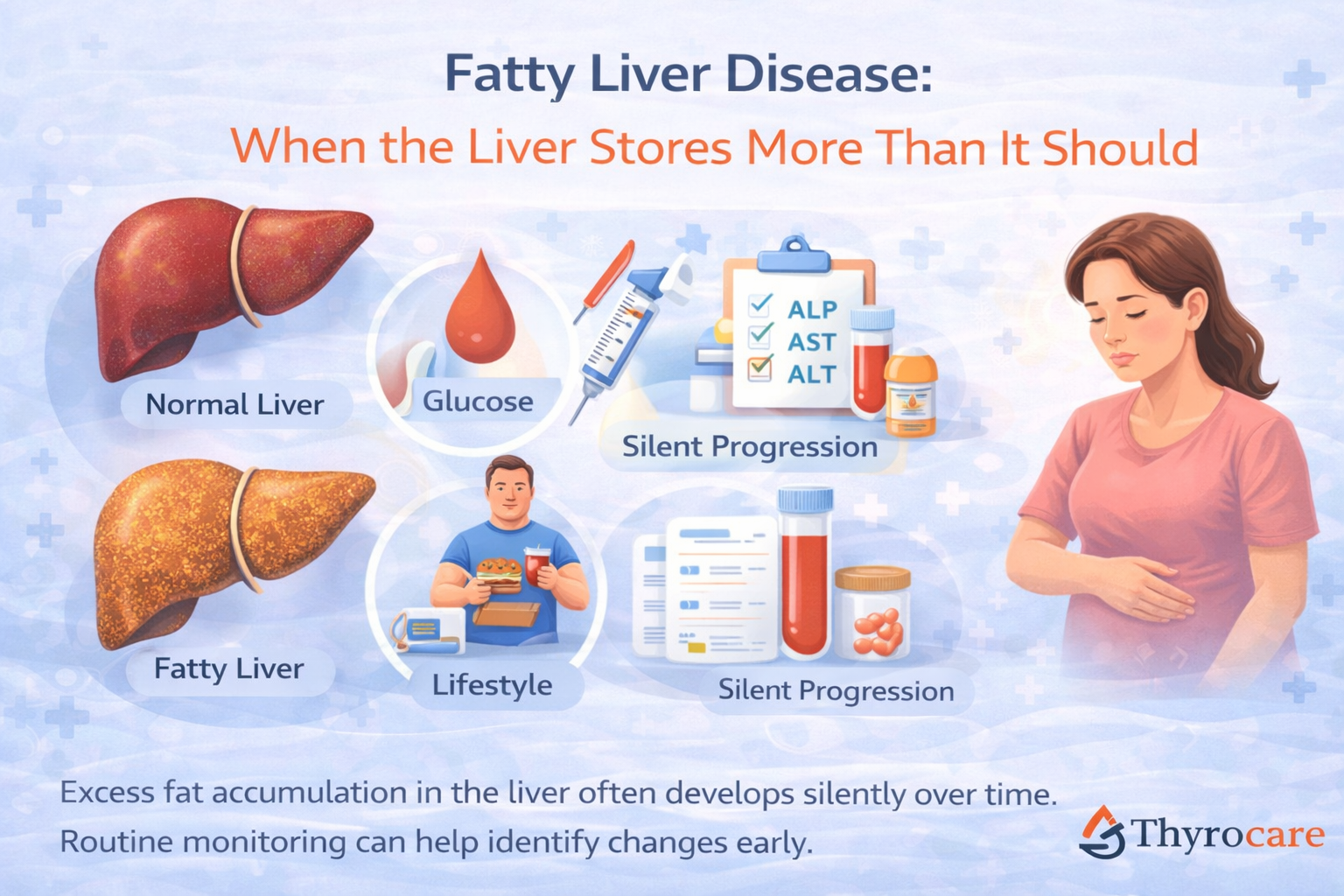
Fatty Liver Disease: When the Liver Stores More Than It Should
The liver is one of the most hardworking organs in the body, quietly managing fats, sugars, nutrients, and toxins every single day. Under healthy conditions, it stores only small, controlled amounts of fat. Problems begin when fat starts accumulating faster than the liver can process it. This gradual buildup leads to fatty liver disease—a condition that often develops silently and remains unnoticed for years.
What Is Fatty Liver Disease?
Fatty liver disease occurs when excess fat accumulates inside liver cells beyond healthy limits. When this buildup happens without alcohol being a contributing factor, it is called Non-Alcoholic Fatty Liver Disease (NAFLD). NAFLD is closely linked to metabolic health rather than drinking habits, which is why it can affect people across different ages, body types, and lifestyles.
Why Fatty Liver Often Has No Symptoms
In the early stages, fatty liver disease rarely causes pain or discomfort. The liver continues performing its essential functions even as fat builds up internally. Because daily routines remain unaffected and energy levels may feel normal, there are usually no clear warning signs. Many people discover fatty liver only during routine blood tests or scans done for unrelated reasons, making early awareness especially important.
The Metabolic Link Behind NAFLD
NAFLD develops gradually as a result of long-term metabolic patterns. Changes in how the body handles insulin, sugars, and fats can slowly encourage fat storage in the liver. These internal shifts happen over time and are easy to overlook, which is why fatty liver disease often progresses quietly in the background.
How Fatty Liver Can Progress Over Time
In its earliest form, fatty liver involves only fat accumulation. If this internal stress continues unmonitored, it may gradually lead to inflammation and changes in liver enzyme levels. This progression is typically slow and does not happen overnight. Identifying early trends through testing is far more meaningful than waiting for advanced symptoms to appear.
Who Should Pay Closer Attention to Liver Health?
People with long-standing metabolic imbalances, weight fluctuations over the years, sedentary routines, or a family history of metabolic conditions may benefit from paying closer attention to liver-related markers. Because NAFLD develops silently, routine monitoring becomes one of the most effective ways to stay informed and proactive.
Why Blood Testing Matters for Liver Awareness
Blood tests that assess liver enzymes and metabolic markers provide valuable insight into how the liver is functioning and whether it is experiencing fat-related stress. Testing supports early understanding and helps guide informed discussions with doctors before more serious liver changes occur.
Making Liver Health Monitoring Simple
Thyrocare includes liver-related parameters in its blood test offerings to support fatty liver awareness. When you book a Thyrocare blood test through BookMyTest, sample collection is arranged at your home, and reports are shared digitally within 24 to 48 hours, making regular liver health monitoring convenient and accessible.
Conclusion
Fatty liver disease does not begin with discomfort—it begins with gradual fat accumulation inside the liver. Understanding NAFLD and its silent progression highlights why early awareness and routine testing play an important role in supporting long-term liver health.
FAQs
Can fatty liver disease be detected through Thyrocare tests?
Thyrocare tests include liver enzyme and metabolic markers that help support fatty liver awareness.
Is free home sample collection available for Thyrocare liver tests?
Yes. When you book a Thyrocare test through BookMyTest, free home sample collection is included.
Is fasting required for liver-related blood tests?
Some liver and metabolic tests may require fasting. Clear instructions are shared during test booking.
Who collects the blood sample during a Thyrocare blood test at home?
A trained Thyrocare phlebotomist collects the sample at your home following proper hygiene practices.
When will I receive my Thyrocare test reports?
Most Thyrocare reports are delivered digitally within 24 to 48 hours.