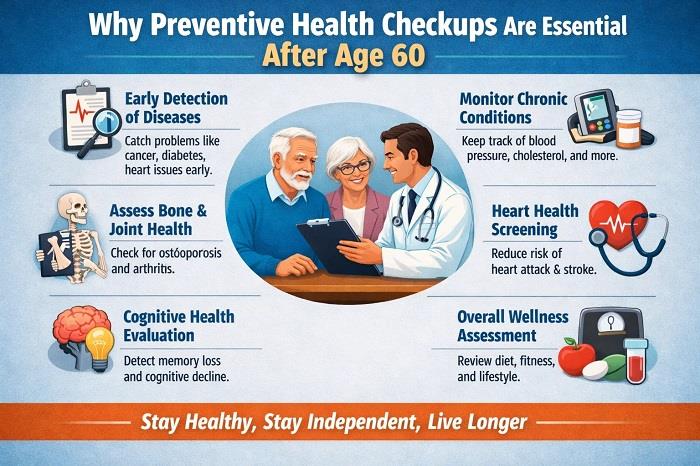
Why Preventive Health Checkups Are Essential After Age 60
Growing older brings wisdom and life experience—but it also brings new health challenges. After the age of 60, the body undergoes natural changes that increase the risk of chronic conditions such as heart disease, diabetes, arthritis, and kidney problems. Many of these conditions develop slowly and may not show clear symptoms in the early stages. This is why preventive health checkups become especially important after 60. Regular screening helps detect health issues early, making treatment easier and improving quality of life
Early Detection of Age-Related Diseases
After 60, the likelihood of developing chronic diseases increases significantly. Conditions such as high blood pressure, diabetes, thyroid disorders, and heart disease often develop quietly. Many individuals feel healthy even when underlying problems exist.
Preventive health checkups include tests that identify these conditions before symptoms become severe. Early detection allows doctors to recommend treatment or lifestyle changes that can prevent complications. Identifying problems early often reduces the need for intensive medical treatment later. Regular testing also helps track existing health conditions and ensures medications are working effectively.
Monitoring Vital Organ Health
As the body ages, vital organs such as the heart, liver, kidneys, and lungs may become less efficient. Routine health checkups help monitor organ function and detect abnormalities early.
Blood tests and diagnostic screenings can evaluate kidney function, liver enzymes, cholesterol levels, and blood sugar. These tests provide important insights into how well the body is functioning.
Monitoring organ health regularly helps prevent serious complications and supports long-term independence and well-being.
Managing Nutritional Deficiencies
Older adults are more likely to experience nutritional deficiencies. Reduced appetite, digestive changes, and certain medications can affect nutrient absorption. Deficiencies in vitamins such as Vitamin D and Vitamin B12 are common after 60 and can lead to fatigue, bone weakness, and nerve problems. Preventive health checkups often include vitamin testing, helping doctors recommend dietary improvements or supplements when needed. Maintaining proper nutrition is essential for energy, immunity, and overall health in later years.
Preventing Serious Complications
Preventive care focuses on stopping diseases before they progress. Regular screening reduces the risk of severe complications such as heart attack, stroke, kidney failure, and bone fractures. Small health issues detected early can often be managed with simple lifestyle changes. Without regular monitoring, these problems may worsen over time and become difficult to treat. Preventive checkups provide reassurance and help individuals stay informed about their health status.
Improving Quality of Life
Good health is essential for maintaining independence and enjoying daily activities. Preventive health checkups help older adults stay active and confident about their health. Knowing your health status allows you to make informed decisions about diet, exercise, and medical care. It also reduces anxiety by providing clarity and guidance. Healthy aging is not just about living longer—it is about living better.
Recommended Tests After Age 60
Preventive health checkups for seniors typically include:
-
Blood sugar testing
-
Cholesterol testing
-
Kidney function tests
-
Liver function tests
-
Thyroid profile
-
Complete blood count
-
Vitamin level testing
-
Bone health screening
-
Heart health evaluation
Doctors may recommend additional tests depending on medical history and individual risk factors. Preventive health checkups are one of the most effective ways to maintain good health after 60. Regular screening helps detect diseases early, monitor organ function, and prevent serious complications.
Taking a proactive approach to health can make a significant difference in long-term well-being. With routine preventive care, older adults can maintain independence, stay active, and enjoy a healthier life.