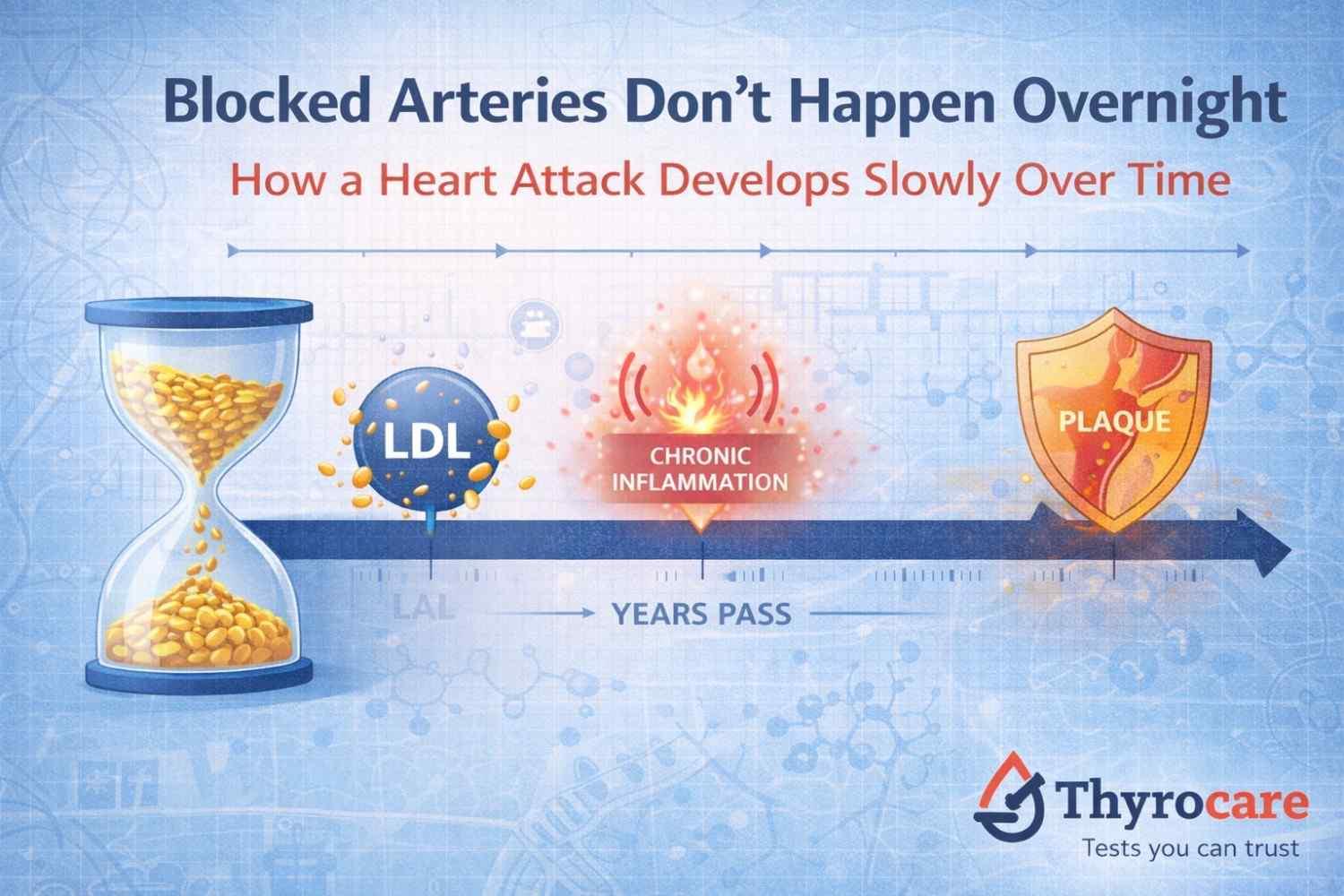
Blocked Arteries Don’t Happen Overnight: The Slow Biology Behind a Heart Attack
Heart attacks are often described as sudden, dramatic events. In reality, the biological processes that lead to a blocked artery usually unfold slowly—sometimes over decades. Understanding how arteries gradually change over time helps shift the conversation from emergency response to long-term prevention.
A heart attack may occur in minutes, but the groundwork is typically laid years earlier.
It Begins with Subtle Vessel Stress
Arteries are lined with a delicate inner layer called the endothelium. This lining regulates blood flow and prevents unwanted clot formation. When exposed repeatedly to metabolic stress, inflammation, or lipid imbalance, the endothelial surface becomes more vulnerable.
This early stress is silent. There are no symptoms, no discomfort—just gradual internal change.
The Role of LDL Oxidation
Low-density lipoprotein (LDL) cholesterol is commonly associated with heart disease. However, it is not merely the presence of LDL that matters—it is how it behaves within the bloodstream.
When LDL particles become oxidized, they are more likely to penetrate the arterial wall. This triggers an immune response, attracting inflammatory cells that begin forming fatty streaks along vessel surfaces. Over time, these streaks contribute to plaque development.
This process is gradual and often unnoticed.
Triglycerides and Lipid Patterns
Triglycerides are another important component of lipid balance. Elevated triglyceride levels can contribute to vascular strain and interact with other lipid abnormalities to accelerate plaque formation.
It is not one number alone, but the overall lipid pattern that shapes long-term arterial health.
Chronic Inflammation Fuels Progression
Inflammation acts as a quiet accelerator in arterial blockage. Persistent low-grade inflammation signals the immune system to remain active within vessel walls. This ongoing activity promotes plaque growth and destabilization.
Because chronic inflammation does not usually cause obvious symptoms, its vascular impact can go undetected for years.
Plaque Formation Is a Slow Accumulation
Plaque develops layer by layer. Fat deposits, inflammatory cells, and fibrous tissue combine to narrow the artery gradually. Blood flow adjusts and compensates during early stages, which is why individuals often feel completely normal.
Symptoms usually appear only when blockage becomes severe or when plaque suddenly ruptures.
Why Early Awareness Matters
Blocked arteries are not the result of a single event—they are the outcome of long-term biological changes. Monitoring lipid patterns and inflammatory markers helps identify risk during this slow progression phase.
Preventive testing focuses on identifying these patterns before structural damage becomes critical.
Heart Risk Monitoring with Thyrocare
Thyrocare offers comprehensive blood testing that evaluates lipid profiles and markers associated with cardiovascular risk. When you book a Thyrocare blood test through BookMyTest, trained professionals collect samples at home, and digital reports are delivered within 24 to 48 hours, supporting timely preventive health discussions.
Early insight into lipid patterns and inflammatory signals allows individuals to address risk before arteries become critically narrowed.
Conclusion
Blocked arteries do not form overnight. LDL oxidation, triglyceride imbalance, and chronic inflammation slowly shape arterial health over time. Understanding this gradual progression reinforces the importance of preventive monitoring rather than waiting for a sudden event to reveal hidden risk.
FAQs
Do blocked arteries develop suddenly?
No. Arterial blockage usually develops gradually over many years.
What blood markers are linked to artery blockage risk?
Lipid profiles and inflammatory markers in a Thyrocare blood test help assess cardiovascular risk patterns.
Is Thyrocare home sample collection available for heart risk testing?
Yes. Thyrocare home sample collection is available when booking preventive tests through BookMyTest.
Does normal cholesterol eliminate heart attack risk?
Not always. LDL behavior, triglyceride levels, and inflammation also influence risk.
How soon are Thyrocare blood test reports available?
Most Thyrocare blood test reports are delivered digitally within 24 to 48 hours