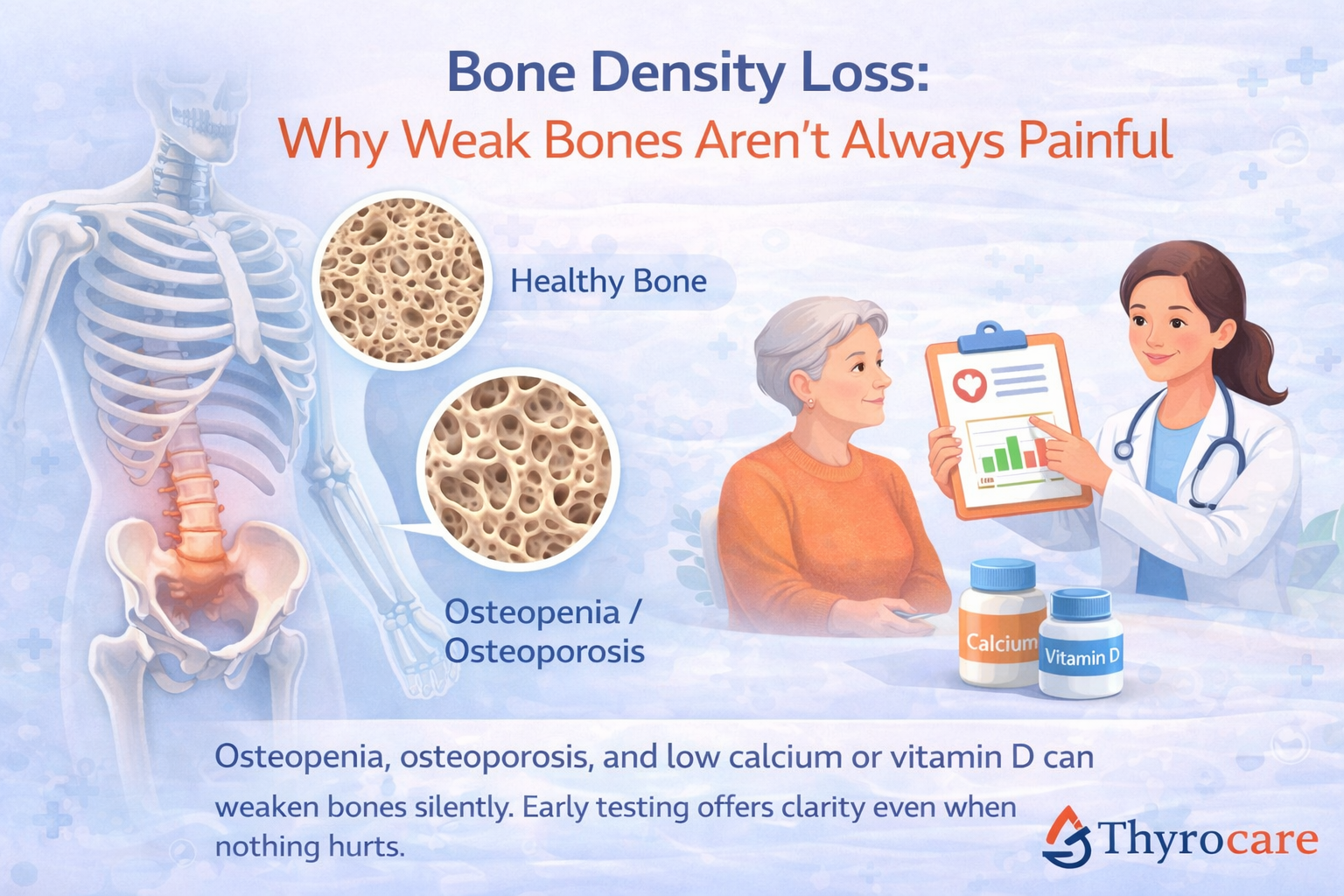
Bone Density Loss: Why Weak Bones Aren’t Always Painful
When people think about weak bones, they often imagine pain, fractures, or difficulty walking. In reality, bone density loss usually develops quietly. Many individuals live for years with weakening bones without experiencing any obvious discomfort. This is why conditions like osteopenia and osteoporosis are often discovered only through testing.
Understanding how bone density changes helps explain why awareness matters even when nothing hurts.
What Is Bone Density Loss?
Bone density refers to how strong and mineral-rich the bones are. Over time, bones naturally lose density, but in some people this loss happens faster than expected.
- Osteopenia is an early stage where bone density is lower than normal but not severely reduced.
- Osteoporosis is a more advanced stage where bones become fragile and more prone to fractures.
Neither condition usually causes pain in the early stages.
Why Weak Bones Don’t Always Hurt
Bones don’t have warning signals like muscles or joints. Bone loss doesn’t cause soreness or stiffness by itself. Many people feel completely fine until a minor fall or injury leads to an unexpected fracture.
This lack of symptoms is why bone health issues are often called “silent.”
The Role of Calcium and Vitamin D
Calcium is a key building block of bones, while vitamin D helps the body absorb calcium effectively. Low levels of either can gradually weaken bone structure.
Limited sun exposure, dietary gaps, absorption issues, and lifestyle factors can all influence calcium and vitamin D balance over time.
Who Is More Likely to Experience Bone Density Loss?
Bone density loss can affect both men and women, especially with increasing age. Hormonal changes, long-term inactivity, nutritional deficiencies, and certain medical conditions may increase risk. Because these factors develop slowly, testing becomes an important tool for early insight.
Why Early Testing Helps
Testing allows bone-related imbalances to be identified before fractures occur. It provides clarity about calcium, vitamin D, and other supporting markers so that timely discussions with doctors can take place.
Making Bone Health Monitoring Simple
JAANCH BONE AND MUSCLE HEALTH offered through Thyrocare blood tests help assess internal balance as part of routine health awareness. With Thyrocare blood test at home, sample collection is convenient, and reports are delivered digitally within 24 to 48 hours.
Conclusion
Bone density loss doesn’t announce itself with pain. Understanding osteopenia, osteoporosis, and the role of calcium and vitamin D helps protect long-term mobility and independence through early awareness.
FAQs
Can bone density loss be detected through Thyrocare tests?
Thyrocare tests help assess supporting factors like calcium and vitamin D levels, which are important for bone health awareness.
Is free home sample collection available for Thyrocare bone health tests?
Yes. When you book a Thyrocare test through BookMyTest, free home sample collection is included.
Is fasting required for calcium or vitamin D tests?
Most calcium and vitamin D tests do not require fasting. Test-specific instructions are shared during Thyrocare test booking.
Who collects the blood sample at home?
An expert Thyrocare phlebotomist visits your home and collects the sample using proper hygiene practices.
When will I receive my Thyrocare test reports?
Most Thyrocare reports are delivered within 24 to 48 hours as a soft copy to your registered email ID.