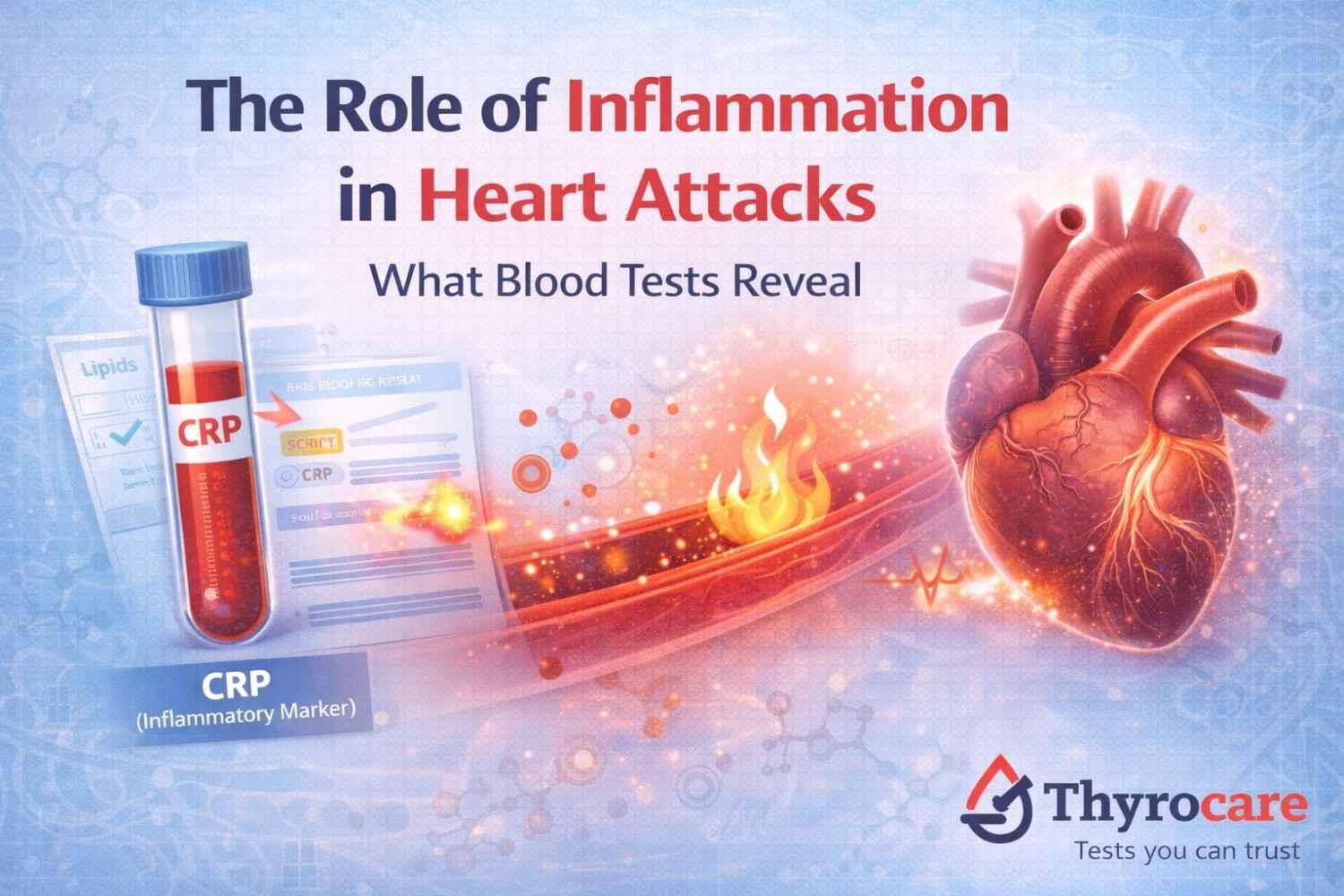
The Role of Inflammation in Heart Attacks: What Blood Tests Reveal
Heart attacks are commonly associated with blocked arteries and high cholesterol. While cholesterol plays a role, it is not the entire story. Increasingly, research shows that inflammation is a central driver in the development and triggering of heart attacks. Understanding this inflammatory component helps explain why some individuals with “acceptable” cholesterol levels still experience cardiovascular events.
Heart attacks are not just mechanical blockages—they are often inflammatory events.
What Is Inflammation in the Context of Heart Health?
Inflammation is the body’s natural defense response to injury or stress. In short bursts, it protects and heals. However, when inflammation becomes chronic and low-grade, it can quietly damage blood vessels over time.
Inside arteries, persistent inflammation weakens vessel walls, promotes plaque buildup, and increases the risk of plaque rupture—the event that often triggers a heart attack.
How Inflammation Contributes to Artery Damage
When inflammatory signals remain active:
- The inner lining of blood vessels (endothelium) becomes stressed
- Immune cells accumulate within arterial walls
- Plaque becomes unstable and more likely to rupture
A heart attack frequently occurs not just because of plaque buildup, but because inflamed plaque ruptures and forms a sudden clot.
This is why inflammation is considered a key underlying factor.
CRP: A Marker of Systemic Inflammation
C-reactive protein (CRP) is a blood marker that reflects systemic inflammation. Elevated CRP levels may indicate ongoing inflammatory activity in the body, including within blood vessels.
While CRP does not diagnose a heart attack, it can signal increased cardiovascular risk when persistently elevated.
Monitoring inflammatory markers adds another layer of preventive insight beyond lipid values alone.
Why Cholesterol Alone Is Not Enough
Cholesterol contributes to plaque formation, but inflammation influences whether that plaque remains stable or becomes dangerous. Two individuals with similar cholesterol levels may have very different inflammatory profiles—and therefore different levels of risk.
This explains why heart risk assessment requires looking beyond a single parameter.
Systemic Inflammation and Metabolic Health
Inflammation is often linked with metabolic imbalances. Persistent systemic inflammation may coexist with subtle metabolic strain, increasing long-term cardiovascular vulnerability.
Because this process develops gradually and without pain, blood testing becomes an important early awareness tool.
How Blood Tests Support Cardiovascular Risk Awareness
Comprehensive blood tests can evaluate lipid patterns and inflammatory markers together. This combined approach provides a more complete understanding of cardiovascular risk than cholesterol alone.
Preventive testing aims to identify silent risk factors before symptoms appear.
Preventive Testing with Thyrocare
Thyrocare offers preventive health testing that includes lipid profiles and inflammatory markers relevant to heart health. When you book a Thyrocare blood test through BookMyTest, trained professionals provide convenient home sample collection, and digital reports are delivered within 24 to 48 hours, supporting timely preventive evaluation.
Early awareness of inflammatory patterns allows informed medical discussions before complications arise.
Conclusion
Heart attacks are not solely the result of high cholesterol—they are often the outcome of chronic inflammation interacting with vascular plaque. Understanding the role of CRP and systemic inflammation shifts heart health from a single-number focus to a broader, more accurate perspective.
Looking beyond cholesterol enables smarter preventive decisions.
FAQs
Is inflammation linked to heart attacks?
Yes. Chronic inflammation can weaken arteries and contribute to plaque instability, increasing heart attack risk.
What does CRP indicate in a Thyrocare blood test?
CRP in a Thyrocare blood test reflects systemic inflammation, which may be associated with cardiovascular risk.
Is Thyrocare home sample collection available for heart health screening?
Yes. Thyrocare home sample collection is available when booking preventive heart health tests through BookMyTest.
Can normal cholesterol still carry heart risk?
Yes. Inflammation and other vascular factors can influence risk even when cholesterol appears normal.
How soon are Thyrocare blood test reports delivered?
Most Thyrocare blood test reports are delivered digitally within 24 to 48 hours.