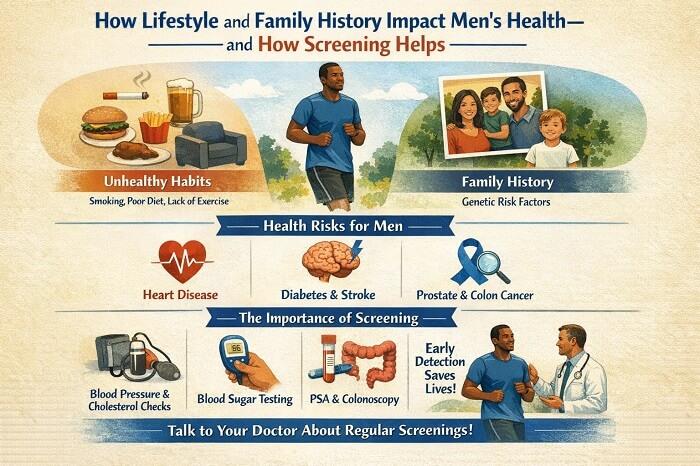
How Lifestyle and Family History Impact Mens Health
Men often delay health checkups until symptoms become hard to ignore. Part of it is habit, part of it is the belief that feeling “mostly fine” means everything is fine. But many of the most serious health conditions affecting men don’t appear overnight. They develop quietly, influenced by daily lifestyle choices and genetic factors passed down through families. Understanding how these two forces shape men’s health is the first step toward prevention—and that’s where regular health screening plays a critical role.
The Role of Lifestyle in Men’s Health
Lifestyle habits have a powerful and cumulative impact on long-term health. Factors such as diet, physical activity, sleep patterns, stress levels, smoking, and alcohol consumption directly affect the heart, metabolism, liver, kidneys, and hormonal balance. Poor dietary choices and sedentary routines increase the risk of obesity, type 2 diabetes, high cholesterol, and fatty liver disease. Chronic stress and lack of sleep contribute to high blood pressure, insulin resistance, and weakened immunity.
What makes lifestyle-related risks especially concerning is that they often progress silently. A man may feel energetic and productive while underlying issues like elevated blood sugar, early hypertension, or abnormal lipid levels continue to worsen. Over time, these unchecked changes can lead to heart disease, stroke, kidney dysfunction, or metabolic disorders. Without testing, these conditions may remain hidden until complications arise.
How Family History Influences Health Risks
Family history is another major factor that shapes men’s health outcomes. Genetics can influence how the body processes sugar, fats, and cholesterol, how blood pressure is regulated, and how inflammation develops over time. Men with a family history of diabetes, heart disease, hypertension, thyroid disorders, or certain cancers are often at a higher risk of developing these conditions themselves.
Having a genetic predisposition does not guarantee disease, but it does lower the margin for error. For example, a man with a family history of heart disease may develop cardiac issues earlier or with fewer lifestyle triggers compared to someone without that history. Similarly, hereditary patterns can influence hormone levels, prostate health, and metabolic efficiency. Knowing your family health background allows doctors to assess risk more accurately and recommend earlier or more frequent screening.
When Lifestyle and Genetics Combine
The greatest health risks often emerge when poor lifestyle habits intersect with genetic vulnerability. A sedentary routine combined with a family history of diabetes can accelerate insulin resistance. High stress and smoking habits paired with inherited cardiovascular risk can significantly increase the likelihood of heart disease. In these cases, symptoms may still be minimal or absent, creating a false sense of security.
This is why relying solely on how you feel is not enough. Objective health data from screening tests provides a clearer picture of what’s happening internally, long before serious illness develops. Early identification allows for timely lifestyle changes, medical guidance, and risk reduction strategies.
How Preventive Health Screening Makes a Difference
Preventive health screening bridges the gap between hidden risk and visible disease. Comprehensive health checkups evaluate key parameters such as blood sugar levels, lipid profiles, liver and kidney function, inflammatory markers, hormone levels, and blood counts. These tests help detect early abnormalities that may not yet cause symptoms but signal increased risk.
For men, regular screening becomes especially important after the age of 30 and even more so after 40, when metabolic changes tend to accelerate. Screening is also crucial for younger men with strong family histories of chronic disease. Instead of reacting to illness, preventive testing supports proactive decision-making—allowing doctors to recommend dietary changes, exercise plans, stress management strategies, or medical interventions before damage becomes irreversible.
Long-Term Benefits of Early Detection
The benefits of early screening go beyond disease detection. Identifying borderline or early-stage abnormalities often means conditions can be managed with lifestyle adjustments rather than long-term medication. Early intervention reduces healthcare costs, prevents complications, and improves quality of life. It also provides reassurance when results are normal, helping individuals maintain healthy habits with confidence.
Regular health assessments also create a baseline, making it easier to track changes over time. This trend-based approach is far more effective than one-time testing, especially for conditions that develop gradually.
Taking Control of Men’s Health
Men’s health is shaped by a combination of daily choices and inherited risk factors—but neither is beyond control. While you can’t change your genetics, you can influence how those genes express themselves through lifestyle decisions and timely medical screening. Preventive health checkups empower men to take ownership of their health, detect risks early, and make informed changes before problems escalate.
In today’s fast-paced world, proactive screening is no longer optional—it’s essential. By understanding how lifestyle and family history impact health and using screening as a preventive tool, men can protect their well-being, stay active longer, and reduce the risk of serious illness in the years ahead.
TRUHEALTH Proactive Male offers a comprehensive solution tailored to adult males’ specific needs. Designed to evaluate key aspects of metabolic balance, cardiac risk, hormonal health, liver and kidney function, and diabetes markers, TRUHEALTH Proactive Male goes beyond basic screening to provide a deeper understanding of your internal health profile. It includes an extensive panel of blood and urine tests that highlight early signs of lifestyle-related risks—especially valuable for men with family history or lifestyle factors that increase their susceptibility to chronic conditions. With reliable diagnostics conducted by Metropolis Healthcare and accessible through platforms like BookMyTest, this package empowers men to take proactive steps toward prevention rather than waiting for symptoms to appear.