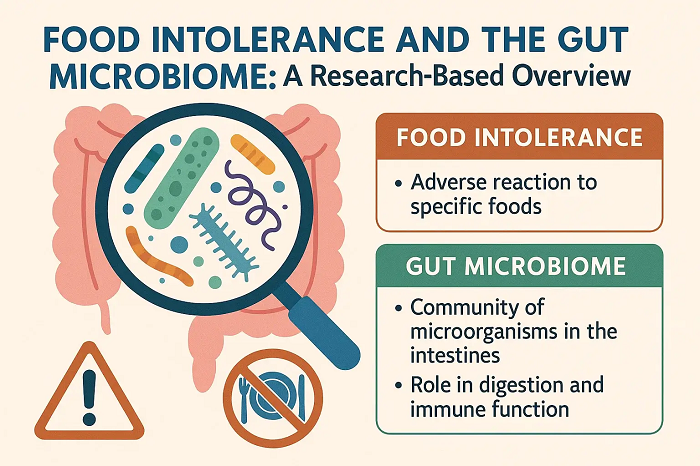
Food Intolerance and the Gut Microbiome: A Research-Based Overview
If you’ve ever eaten something “perfectly normal” and then spent the next few hours feeling bloated, crampy, or just… off, you’re not alone. A huge number of people experience food intolerance at some point, and while the symptoms feel simple, the science behind it is anything but.
At the center of it all? Your gut microbiome—the trillions of bacteria, fungi, and microbes quietly running your digestive system. Let’s break down what the research actually says and how your gut microbes might be the missing link behind food intolerance.
What Exactly Is Food Intolerance?
Food intolerance isn’t an allergy. There’s no immune system emergency, no life-threatening reaction. Instead, it’s usually your gut saying, “I can’t process this properly.”Common intolerances include:
- Lactose intolerance (missing lactase enzyme)
- Fructose malabsorption
- Gluten sensitivity (non-celiac)
- Histamine intolerance
- FODMAP intolerance
The symptoms?
Bloating, gas, cramps, diarrhea, constipation, nausea, headaches, fatigue — sometimes all jumbled together. And here’s where it gets interesting: many of these symptoms overlap with conditions like IBS, and research increasingly points toward the gut microbiome as a major player.
The Gut Microbiome: Your Inner Digestive Ecosystem
Think of your gut microbiome like a crowded, bustling city. Different bacteria have different jobs:
- Some help digest carbs and fibers.
- Some produce vitamins.
- Some break down fats.
- Some protect your gut lining and reduce inflammation.
When everything is balanced, digestion feels effortless. But when the balance shifts — due to antibiotics, stress, infections, poor diet, or genetics — certain foods start causing trouble. This imbalance is called dysbiosis, and it’s strongly linked to food intolerance.
How Microbiome Imbalance Leads to Food Intolerance
1. Reduced Enzyme Production
Many gut bacteria help produce enzymes that digest food. If those bacteria decrease, the enzymes decrease — and suddenly foods you once tolerated start causing symptoms.
Example: People with fructose intolerance often show lower levels of bacteria that help break down fructose properly.
2. Fermentation Overload (and all that gas)
When food isn’t digested well in the small intestine, it moves to the colon undigested. There, bacteria ferment it aggressively, producing excess gas and bloating. This is especially true with FODMAPs, which are rapidly fermented carbohydrates.
3. Increased Gut Inflammation
A disrupted microbiome can irritate the gut lining, making it more sensitive.
Foods that should be harmless suddenly trigger inflammation and symptoms—often called post-infectious food intolerance.
4. Histamine Buildup
Some people lack enough “good bacteria” that break down histamine. Too much histamine = headaches, flushing, hives, digestive discomfort after eating.
This isn’t an allergy — it’s poor histamine metabolism linked to the microbiome.
What Research Says (In Simple Terms)
Recent studies show:
- People with IBS (which overlaps with food intolerance) often have less diversity in gut bacteria.
- Lactose intolerance can improve when specific lactose-digesting bacteria increase.
- Low FODMAP diets change the microbiome, reducing symptoms — especially gas-producing microbes.
- Probiotics can help some intolerances by restoring balance, though results vary.
- Gut bacteria influence how the body breaks down gluten, fats, fiber, and plant compounds.
In short: your microbes decide how well you digest food — sometimes more than your stomach does.
Can the Microbiome Be “Fixed”?
Not instantly. But yes — you can support healthier digestion with consistent habits.Helpful, research-supported strategies:
- Eat more prebiotic fibers (bananas, oats, garlic, onions — unless intolerant).
- Include fermented foods (yogurt, kefir, sauerkraut).
- Reduce ultra-processed food — it harms microbial diversity.
- Try a temporary elimination diet (like low FODMAP) under guidance.
- Identify trigger foods through testing like IgG intolerance panels or elimination-challenge methods.
- Stay hydrated — microbes depend on water for fermentation and metabolism.
Healing the gut is gradual, not overnight.
When Should You Consider Testing?
Testing helps when:
- Symptoms keep coming back
- You can’t pinpoint the trigger
- You react to multiple food groups
- You suspect lactose, gluten, or FODMAP sensitivity
You have IBS-like symptoms
An IgG-based food intolerance test can highlight foods causing unusual reactions, helping you create a clearer elimination roadmap.
Food intolerance isn’t “in your head.” It`s often rooted in the tiny ecosystem inside your gut. Understanding your microbiome—how balanced or imbalanced it is—can explain why certain foods leave you bloated, tired, or uncomfortable.
The good news? With the right approach, the gut can heal, balance can return, and everyday eating can feel easy again.