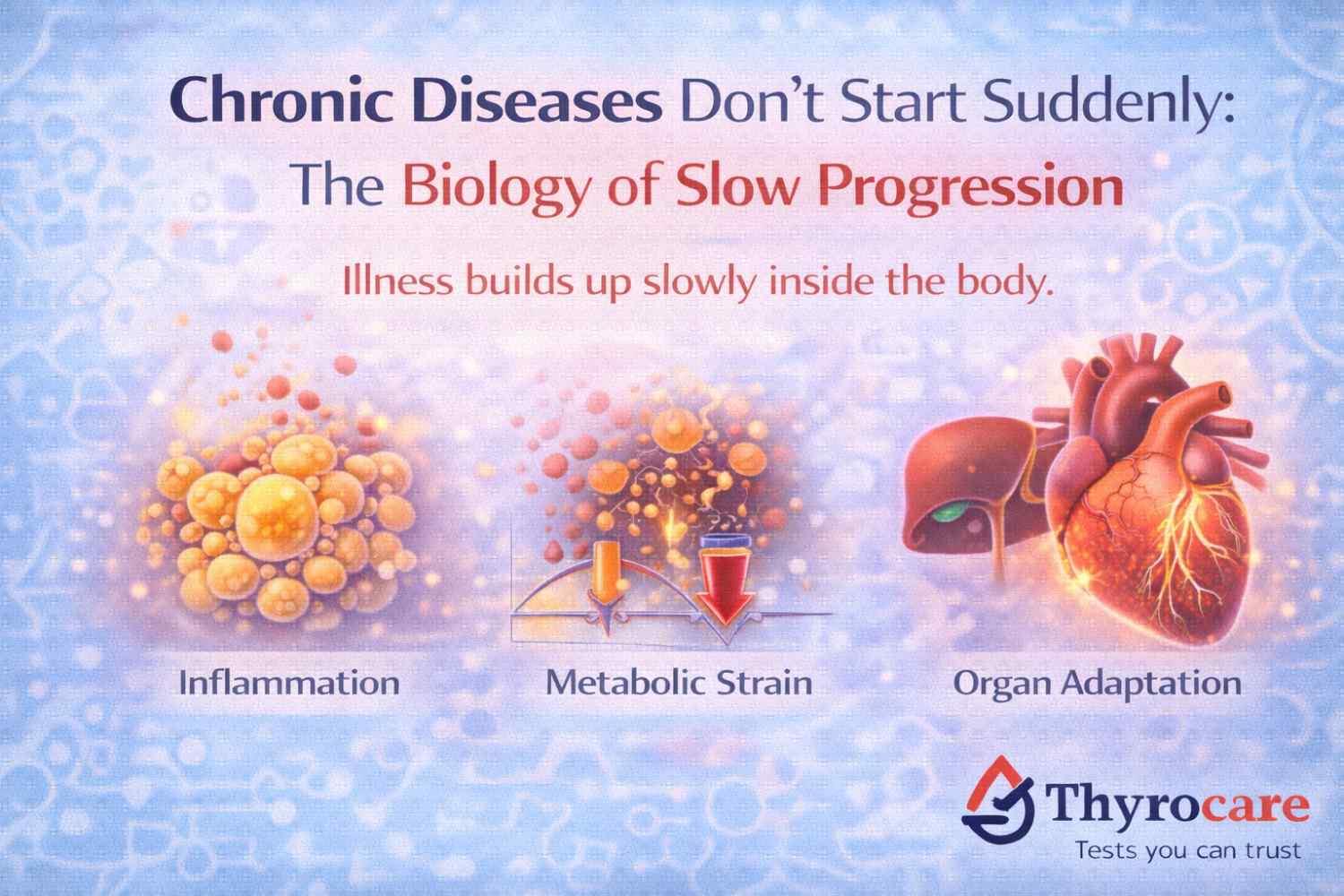
Chronic Diseases Don’t Start Suddenly: The Biology of Slow Progression
Many people describe chronic illness as something that “happened unexpectedly.” One routine test changes, a diagnosis is made, and life suddenly feels divided into before and after. But biologically, most chronic diseases do not begin overnight. They develop gradually through slow internal damage, persistent inflammation, and long-term metabolic strain.
The diagnosis may feel sudden — the biology rarely is.
The Body Compensates Before It Fails
The human body is remarkably adaptive. When organs experience mild stress, they adjust to maintain stability. Blood vessels become slightly less flexible, the pancreas produces more insulin, the liver stores more fat, and the kidneys filter under increased pressure.
For years, these adaptations keep blood tests near normal. Symptoms remain absent. Daily life continues uninterrupted.
This silent compensation phase is where most chronic diseases quietly begin.
Inflammation: The Slow Accelerator
Low-grade chronic inflammation plays a central role in long-term disease progression. Unlike acute inflammation, which causes visible swelling or pain, chronic inflammation operates quietly at a cellular level.
Persistent inflammatory activity can:
- Stress blood vessel walls
- Alter lipid metabolism
- Disrupt glucose regulation
- Promote tissue remodeling
Over time, this inflammatory background sets the stage for conditions such as heart disease, diabetes, fatty liver, and kidney dysfunction.
Metabolic Strain Builds Gradually
Metabolism is the engine of cellular function. When energy balance shifts — due to diet, inactivity, stress, or genetics — subtle metabolic strain begins.
Insulin resistance may develop years before diabetes is diagnosed. Lipid imbalance may precede cardiovascular symptoms. Mild increases in liver enzymes can signal early fatty changes long before discomfort arises.
These shifts are rarely dramatic. They accumulate slowly.
Organ Adaptation Masks Early Warning Signs
Organs are designed with reserve capacity. The heart can pump efficiently even with mild vascular narrowing. The kidneys can filter adequately despite early structural changes. The liver can compensate for fat accumulation for extended periods.
This built-in reserve delays symptoms, which is why chronic conditions are often detected only during routine screening rather than through discomfort.
By the time symptoms appear, internal stress has usually been present for years.
Why Routine Testing Matters
Because chronic diseases evolve gradually, periodic blood testing becomes essential. Lipid patterns, glucose markers, inflammatory indicators, and organ function tests provide insight into internal trends.
One slightly elevated value may not confirm disease. But patterns over time can reveal progression long before irreversible damage occurs.
Preventive awareness transforms healthcare from reaction to foresight.
Preventive Monitoring with Thyrocare
Thyrocare offers comprehensive preventive blood testing that evaluates metabolic markers, lipid profiles, inflammatory indicators, and organ function parameters. When you book a Thyrocare blood test through BookMyTest, professional home sample collection ensures convenience, and digital reports are delivered within 24 to 48 hours, supporting timely health evaluation.
Tracking trends helps detect slow progression before complications develop.
Conclusion
Chronic diseases do not appear suddenly — they progress quietly through gradual inflammation, metabolic strain, and organ adaptation. The absence of symptoms does not mean the absence of change. Understanding the slow biology behind chronic illness emphasizes the importance of routine monitoring and early detection.
Prevention begins long before diagnosis.
FAQs
Do chronic diseases develop suddenly?
No. Most chronic diseases progress gradually over years through slow internal biological changes.
What role does inflammation play in chronic disease?
Chronic low-grade inflammation contributes to long-term organ stress and metabolic imbalance.
How can a Thyrocare blood test help in early detection?
A Thyrocare blood test evaluates metabolic, inflammatory, and organ function markers that may reflect early changes.
Is Thyrocare home sample collection available for preventive screening?
Yes. Thyrocare home sample collection is available when booking routine preventive tests through BookMyTest.
How soon are Thyrocare blood test reports delivered?
Most Thyrocare blood test reports are delivered digitally within 24 to 48 hours.