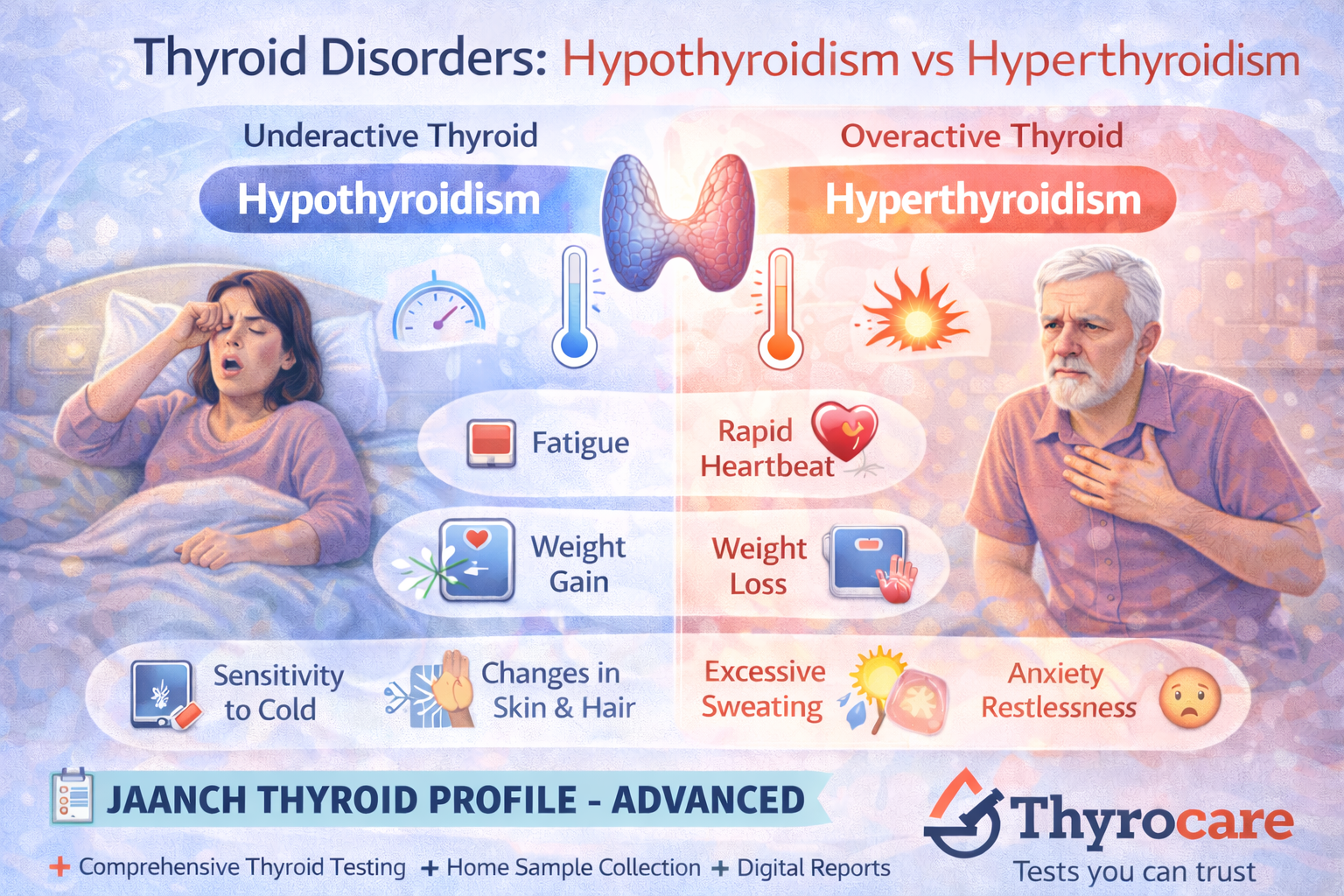
Thyroid Disorders: Hypothyroidism vs Hyperthyroidism
The thyroid is a small, butterfly-shaped gland in the front of the neck, but it plays a powerful role in keeping the body balanced. It helps regulate metabolism, energy levels, heart rate, body temperature, and even mood. When the thyroid does not function as it should, these everyday processes can feel noticeably out of sync. Two of the most common thyroid conditions are hypothyroidism and hyperthyroidism. Although they sound similar, they represent opposite patterns of thyroid activity, and understanding the difference is essential for proper health awareness.
Understanding the Core Difference
The key distinction between hypothyroidism and hyperthyroidism lies in hormone production. Hypothyroidism occurs when the thyroid gland produces too little thyroid hormone, causing the body’s systems to slow down. Hyperthyroidism, on the other hand, happens when the thyroid produces excess hormones, speeding up many bodily functions. Both conditions disturb the body’s natural balance, but in very different ways.
Symptoms of Hypothyroidism
When thyroid hormone levels are low, people may experience ongoing tiredness, gradual weight gain, increased sensitivity to cold, dry skin, hair thinning, and mental sluggishness. These symptoms usually develop slowly, which is why they are often dismissed as stress, ageing, or lifestyle-related fatigue. Over time, however, untreated hypothyroidism can significantly affect daily comfort and overall well-being.
Symptoms of Hyperthyroidism
Hyperthyroidism has almost the opposite effect. Excess thyroid hormones can cause unexplained weight loss, rapid or irregular heartbeat, restlessness, anxiety, excessive sweating, and difficulty sleeping. Some people may also notice hand tremors or feeling unusually warm. These symptoms can appear more suddenly, but they are still commonly mistaken for anxiety or work-related stress.
Why Symptoms Alone Are Not Enough
One of the biggest challenges with thyroid disorders is that their symptoms often overlap with many other health conditions. Fatigue, weight changes, and mood shifts are common complaints with multiple causes. This overlap makes it difficult to clearly identify whether the thyroid is underactive, overactivTesting Brings Thyroid Clarity
Blood testing is the most reliable way to understand thyroid function. By measuring multiple thyroid-related markers, testing provides clarity that symptoms alone cannot offer. This helps remove guesswork and supports informed discussions with doctors at an early stage.
Why Choose JAANCH Thyroid Profile – Advanced
Thyrocare offers the JAANCH Thyroid Profile – Advanced, designed to give a comprehensive picture of thyroid health. Instead of relying on a single value, this profile evaluates multiple thyroid parameters, helping distinguish clearly between hypothyroidism and hyperthyroidism. When booked through BookMyTest, home sample collection is arranged for convenience, and digital reports are delivered within 24 to 48 hours, making thyroid monitoring simple and accessible.
Conclusion
Hypothyroidism and hyperthyroidism affect the body in opposite ways, but both can quietly disrupt daily life if left unmonitored. Understanding their differences and relying on comprehensive testing is the most effective way to gain clarity. With the JAANCH Thyroid Profile – Advanced, early awareness becomes easier, supporting better long-term thyroid health decisions.
FAQs
Can the JAANCH Thyroid Profile – Advanced identify both hypo and hyperthyroidism?
Yes. It includes multiple thyroid markers that help assess underactive and overactive thyroid function.
Is home sample collection available for this test?
Yes. Free home sample collection is included when booked through BookMyTest.
Is fasting required for thyroid blood tests?
Most thyroid tests do not require fasting. Instructions are shared during booking if needed.
When will the test reports be available?
Most reports are delivered digitally within 24 to 48 hours.