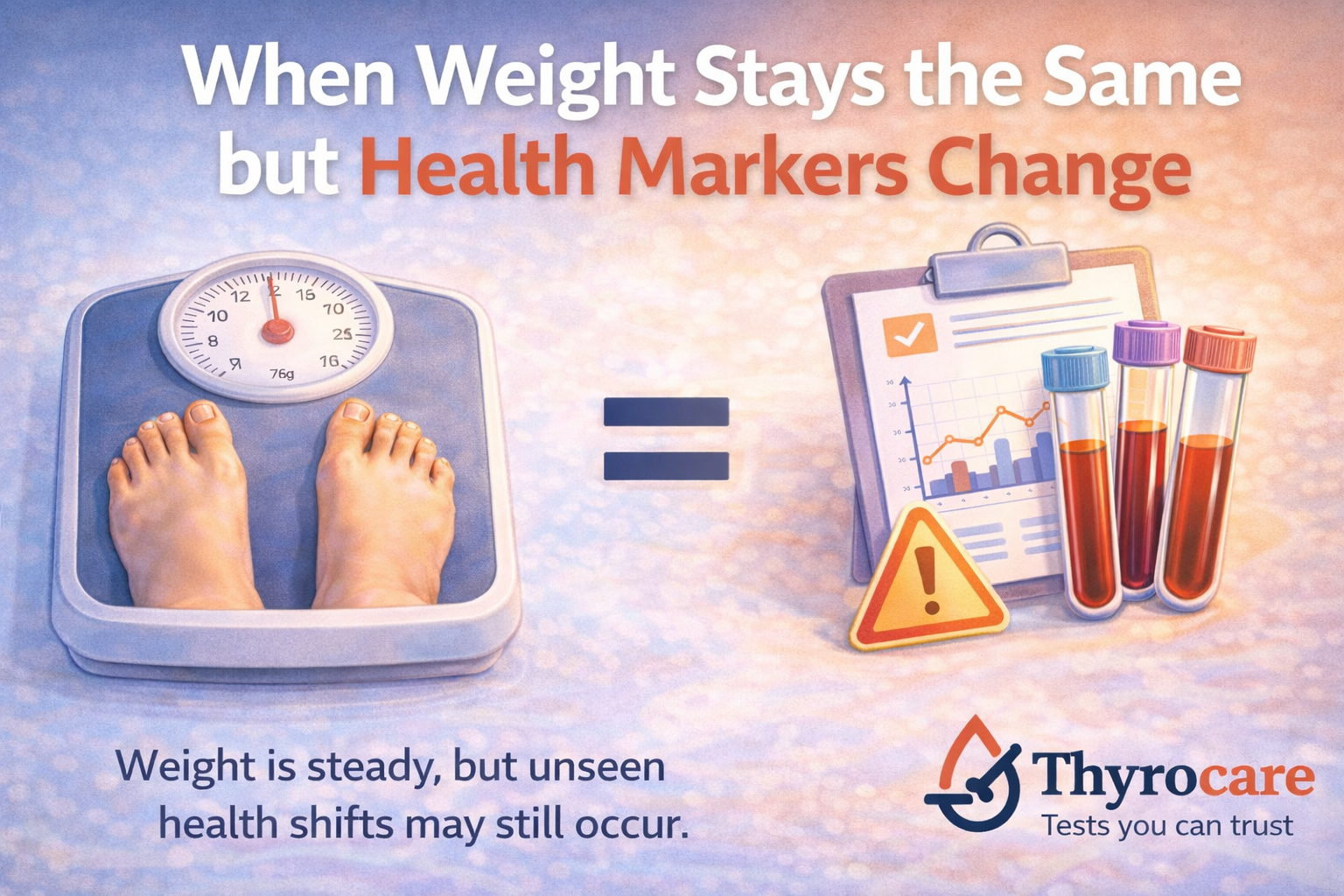
When Weight Stays the Same but Health Markers Change
Stepping on the scale and seeing the same number month after month can feel reassuring. Many people assume that if weight hasn’t changed, health hasn’t either. In reality, the body can undergo significant internal changes even when external weight remains stable. Blood markers often shift quietly, reflecting metabolic, hormonal, or organ-level changes long before they affect appearance or clothing size.
Why Weight Is a Limited Health Indicator
Body weight is only a surface-level measure. It does not reveal how efficiently the body is managing sugar, fats, hormones, or inflammation. Two people with the same weight—or even the same person at the same weight—can have very different internal health profiles. This is why relying solely on weight can create a false sense of security.
What Changes Beneath the Surface
Health markers in the blood respond to lifestyle, stress, sleep, ageing, and metabolism. Cholesterol patterns, glucose handling, liver enzymes, kidney markers, or inflammatory indicators may shift gradually over time. These changes don’t always affect weight immediately, but they do reflect how the body is coping internally.
Metabolism Can Change Without Weight Gain
Metabolic efficiency often changes before weight does. The body may begin handling sugar differently, storing fat more easily, or responding less effectively to insulin—without any visible change on the scale. These shifts can increase long-term health risks even though outward appearance remains the same.
Why People Often Miss These Signals
Because there is no dramatic symptom or visible change, internal shifts are easy to ignore. Energy levels may feel slightly lower, recovery from fatigue may take longer, or focus may fluctuate—but these signs are often attributed to stress or routine life. Without testing, the real cause remains hidden.
The Importance of Tracking Health Markers
Blood tests provide measurable insight into what the body is doing internally. Comparing results over time helps identify trends—whether markers are stable, improving, or slowly drifting in an unhealthy direction. This trend-based understanding is far more meaningful than a single reading or a stable weight.
How Preventive Testing Supports Awareness
Routine health testing shifts the focus from reacting to symptoms to understanding risk early. Identifying changes in markers allows timely lifestyle adjustments or medical guidance before those changes translate into visible health problems.
Health Monitoring with Thyrocare
Thyrocare Metabolic Profile Basic offers a wide range of preventive health blood tests that help track internal health markers beyond weight. When you book a Thyrocare blood test through BookMyTest, sample collection is done at home and reports are delivered digitally within 24 to 48 hours, making regular monitoring simple and accessible.
Conclusion
Stable weight does not always mean stable health. Internal markers can change quietly, reflecting how the body responds to lifestyle and time. Paying attention to these unseen shifts through routine testing helps build true health awareness—far beyond what the scale can show.
FAQs
Can health markers change even if my weight doesn’t?
Yes. Internal markers often shift before weight changes become noticeable.
Does stable weight mean my metabolism is healthy?
Not always. Metabolic changes can occur without affecting weight.
How can I know if my internal health is changing?
Regular blood tests help track trends in key health markers over time.
Is preventive testing useful even if I feel fine?
Yes. Testing supports early awareness before symptoms appear.