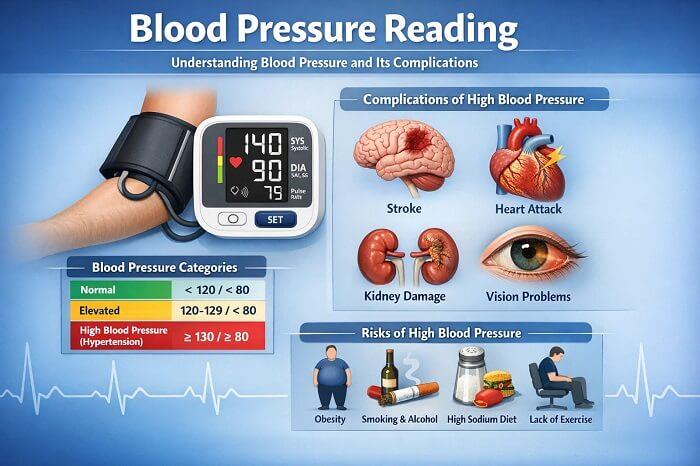
Blood Pressure Reading: Understanding Blood Pressure and Its Complications
Blood pressure is one of the most important indicators of overall cardiovascular health, yet it is often ignored until a serious health issue arises. It reflects how effectively the heart pumps blood and how well the blood vessels handle that flow. Regular blood pressure monitoring helps identify early health risks, allowing timely intervention and reducing the chances of long-term complications such as heart disease, stroke, and kidney damage. Understanding what blood pressure means and how variations affect the body is essential for maintaining long-term well-being.
Understanding Blood Pressure
Blood pressure refers to the force exerted by circulating blood against the walls of the arteries as the heart pumps blood throughout the body. It is measured using two values and expressed in millimetres of mercury (mmHg). A typical blood pressure reading is written as systolic pressure over diastolic pressure, for example, 120/80 mmHg.
Systolic pressure is the upper number and represents the pressure in the arteries when the heart contracts and pumps blood. Diastolic pressure is the lower number and measures the pressure in the arteries when the heart relaxes between beats. Both values are equally important, as they provide insight into how hard the heart is working and how elastic the blood vessels are.
Normal blood pressure is generally considered to be around 120/80 mmHg, although this can vary slightly depending on age, lifestyle, and overall health. Blood pressure can fluctuate throughout the day due to physical activity, stress, emotional state, sleep patterns, and diet. Because of these fluctuations, a single abnormal reading does not always indicate a problem, but consistently high or low readings require medical attention.
One of the biggest challenges with blood pressure-related conditions is that they often cause no early symptoms. Many individuals with abnormal blood pressure feel perfectly healthy, which is why regular monitoring is essential. Routine checks help detect trends over time, making it easier to take preventive action before complications develop.
Complications of Varied Blood Pressure
Abnormal blood pressure, whether high or low, can have serious consequences if left unmanaged. Each condition affects the body differently, but both can interfere with proper blood flow to vital organs.
High blood pressure (hypertension) occurs when the force of blood against artery walls remains consistently elevated. Over time, this constant pressure can damage blood vessels and organs. Hypertension significantly increases the risk of heart attack, stroke, and heart failure, as the heart must work harder to pump blood. It can also lead to narrowing and stiffening of arteries, reducing blood supply to the brain and increasing the risk of cognitive decline.
Kidney damage is another major complication of uncontrolled high blood pressure. The kidneys rely on healthy blood vessels to filter waste from the blood. Prolonged hypertension can damage these vessels, potentially leading to chronic kidney disease or kidney failure. Vision problems may also occur, as high blood pressure can damage the delicate blood vessels in the eyes, increasing the risk of blurred vision or vision loss.
Low blood pressure (hypotension), while less common, can also be harmful—especially if it causes symptoms. Symptoms such as dizziness, light-headedness, fatigue, nausea, blurred vision, and fainting occur when the brain and other organs do not receive enough blood. This increases the risk of falls and injuries, particularly in older adults.
Severely low blood pressure can be life-threatening. When blood flow to vital organs drops significantly, it may result in shock, a medical emergency requiring immediate treatment. Persistent hypotension may also signal underlying conditions such as heart problems, hormonal imbalances, dehydration, or nutritional deficiencies.
Both high and low blood pressure can reduce quality of life and increase long-term health risks if not identified and managed appropriately.
Maintaining healthy blood pressure requires a proactive approach. Regular monitoring is the first step in identifying abnormalities early. Lifestyle choices play a crucial role, including a balanced diet rich in fruits, vegetables, whole grains, and low-fat foods, along with reduced salt intake. Regular physical activity, stress management, adequate sleep, and avoiding tobacco and excessive alcohol are equally important in supporting healthy blood pressure levels.
For individuals diagnosed with abnormal blood pressure, following medical advice is essential. This may include prescribed medications, routine follow-up tests, and long-term lifestyle modifications. Consistency in monitoring and treatment helps prevent complications and supports overall cardiovascular health.
In conclusion, understanding blood pressure readings and the complications of varied blood pressure is vital for long-term health. Since abnormal blood pressure often develops silently, early detection through regular monitoring is the key to prevention. By staying informed and proactive, individuals can protect their heart, brain, kidneys, and overall well-being while reducing the risk of serious health conditions later in life.