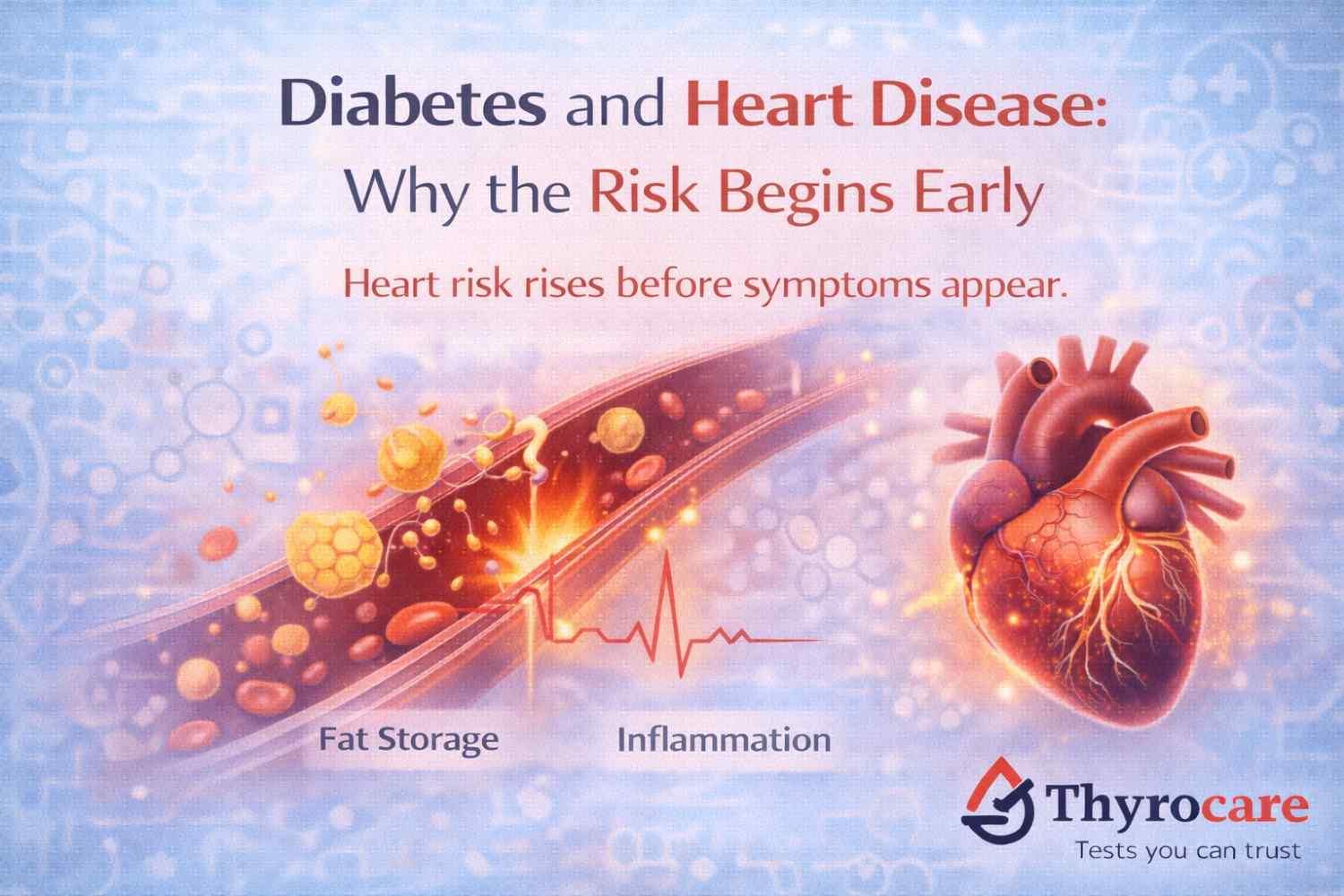
Diabetes and Heart Disease: Why the Risk Begins Early
Many people associate heart disease with high cholesterol and diabetes with high blood sugar. But in reality, these two conditions are deeply connected. Long before chest pain, breathlessness, or a diabetes diagnosis, subtle metabolic changes may already be affecting blood vessels.
The link between diabetes and heart disease does not begin with a heart attack—it begins with glucose-driven vascular damage.
How Glucose Affects Blood Vessels
Glucose is essential for energy. However, when blood sugar levels remain consistently elevated—even mildly—it can stress the inner lining of arteries, known as the endothelium.
The endothelium regulates:
- Blood flow
- Vessel flexibility
- Clot prevention
Chronic exposure to high glucose levels weakens this protective lining, making arteries more vulnerable to plaque formation and inflammation.
Endothelial Dysfunction: The Early Turning Point
Endothelial dysfunction is often one of the first vascular changes in people with insulin resistance or early diabetes. When endothelial cells lose efficiency:
- Blood vessels become less flexible
- Inflammatory signals increase
- Plaque buildup becomes easier
This dysfunction may begin years before noticeable heart symptoms appear.
Inflammation Connects Diabetes and Heart Risk
Persistent metabolic imbalance often triggers low-grade systemic inflammation. Inflammation accelerates plaque formation inside arteries and increases the risk of plaque instability.
Unstable plaque is more likely to rupture, which can lead to clot formation and heart attack.
This is why heart risk in diabetes is not only about sugar—it’s also about inflammation.
Lipid Imbalance Adds to the Risk
Diabetes and insulin resistance frequently alter lipid patterns. Triglycerides may rise, HDL (good cholesterol) may decline, and LDL particles may become more atherogenic.
Even if total cholesterol appears moderate, these subtle lipid shifts increase long-term cardiovascular vulnerability.
Why the Risk Begins Before Diagnosis
Insulin resistance often develops years before diabetes is formally diagnosed. During this silent phase:
- Blood vessels are exposed to metabolic stress
- Inflammation slowly increases
- Lipid patterns begin to shift
By the time blood sugar crosses into diabetic range, vascular strain may already be present.
The Importance of Preventive Monitoring
Monitoring glucose markers, lipid profiles, and inflammatory indicators helps identify cardiometabolic risk early. Understanding these patterns allows informed medical discussions before structural damage becomes advanced.
Preventive awareness supports proactive heart protection rather than waiting for symptoms.
Preventive Testing with Thyrocare
Thyrocare offers comprehensive blood testing that evaluates glucose regulation, lipid balance, and cardiovascular risk indicators. When you book a Thyrocare blood test through BookMyTest, professional home sample collection ensures convenience, and digital reports are delivered within 24 to 48 hours, making routine monitoring simple and accessible.
Early detection supports timely intervention and long-term heart health.
Conclusion
The connection between diabetes and heart disease begins long before symptoms appear. Chronic glucose exposure, endothelial dysfunction, inflammation, and lipid imbalance gradually increase cardiovascular risk. Recognizing this early phase reinforces the importance of preventive screening and metabolic awareness.
FAQs
Does diabetes increase heart disease risk?
Yes. Persistent glucose imbalance can damage blood vessels and increase long-term cardiovascular risk.
How does high blood sugar affect arteries?
Elevated glucose levels can weaken the endothelial lining, promoting inflammation and plaque formation.
What tests help monitor diabetes-related heart risk?
A Thyrocare blood test can assess glucose markers, lipid profiles, and related cardiovascular indicators.
Is Thyrocare home sample collection available for preventive testing?
Yes. Thyrocare home sample collection is available when booking tests through BookMyTest.
How soon are Thyrocare blood test reports delivered?
Most Thyrocare blood test reports are delivered digitally within 24 to 48 hours.