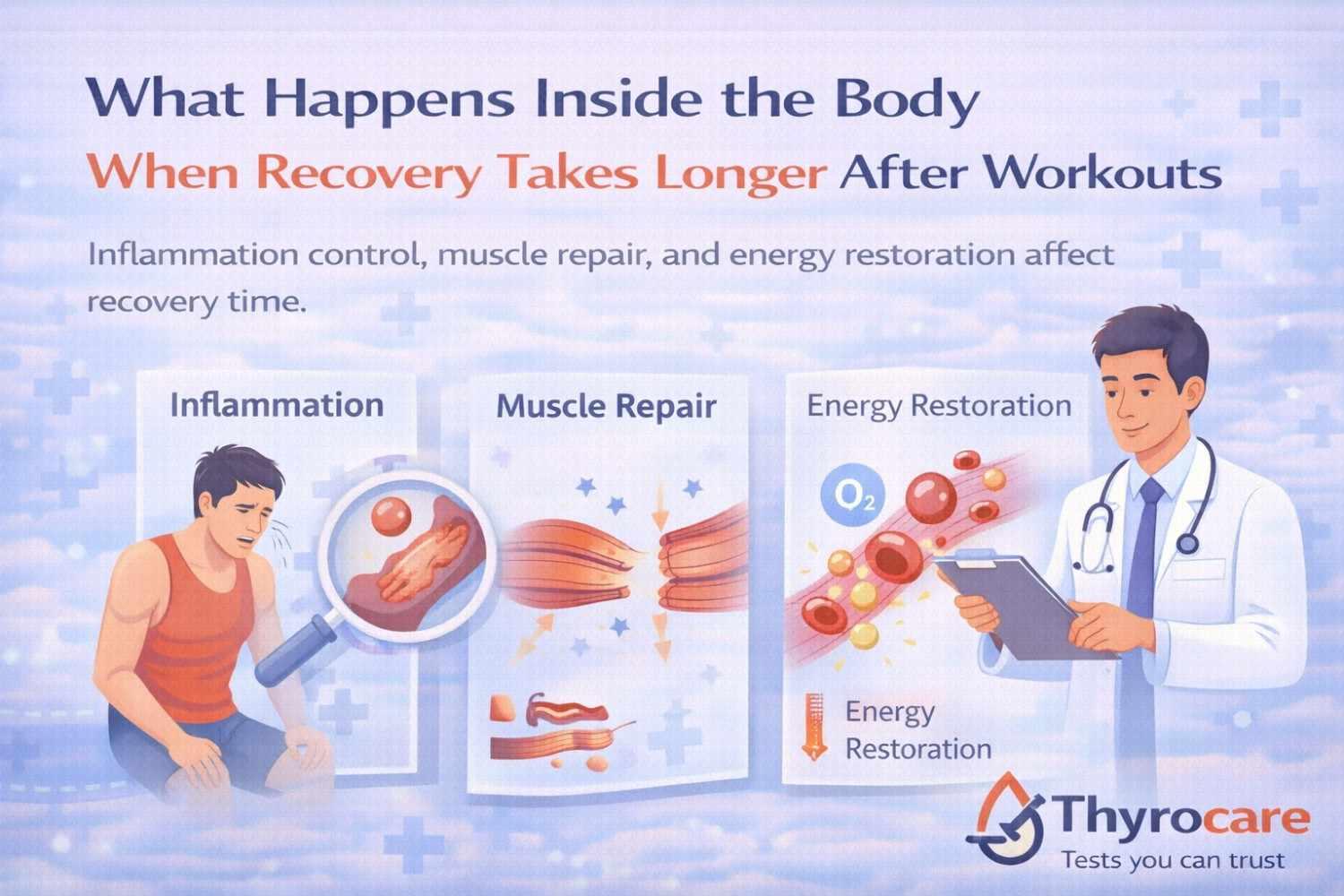
What Happens Inside the Body When Recovery Takes Longer After Workouts
Delayed recovery after exercise is often brushed off as ageing, overexertion, or poor sleep. When soreness lingers longer than expected or energy takes days to return, most people assume they simply need more rest. But recovery isn’t only about muscles—it reflects internal repair processes that begin the moment physical activity ends. When these processes slow down, recovery time increases even if workouts remain unchanged.
Recovery Is More Than Muscle Soreness
Visible soreness is only the surface-level response to exercise. Internally, the body activates repair pathways involving inflammation control, tissue regeneration, oxygen delivery, and energy restoration. When these systems don’t coordinate efficiently, recovery feels prolonged—even if soreness appears mild.
Inflammation Plays a Central Role
Exercise naturally triggers temporary inflammation as part of muscle repair. This response should rise briefly and then settle. When inflammatory markers remain elevated longer than expected, the body stays in a repair mode for extended periods, delaying full recovery. This can happen quietly without pain or swelling.
Muscle Repair Signals Can Slow Down
After physical stress, muscles rely on repair signals to rebuild and strengthen. If these signals are delayed or inefficient, tissue regeneration slows. The result is lingering heaviness, reduced performance, or the feeling that the body hasn’t “reset” between sessions.
Oxygen and Nutrient Delivery Matter
Efficient recovery depends on proper oxygen and nutrient supply to muscles. If circulation or oxygen delivery is even slightly compromised, repair processes take longer. This doesn’t immediately affect strength but shows up as extended fatigue or reduced readiness for the next workout.
Energy Restoration Is a Hidden Factor
Beyond muscle repair, the body must replenish energy stores and rebalance metabolic systems. When this restoration is incomplete, the body enters the next workout already depleted. This creates a cycle where recovery feels slower each time, despite consistent effort.
Why Recovery Delays Are Easy to Miss
Because strength and routine may remain unchanged, prolonged recovery is often normalised. Many people unconsciously reduce workout intensity or frequency without recognising that internal recovery capacity has shifted.
How Blood Tests Provide Insight
Blood markers related to inflammation, oxygen transport, and metabolic balance help explain why recovery slows down. These internal signals reveal whether the body is resolving post-exercise stress efficiently or remaining in a prolonged recovery state.
Understanding Recovery Physiology with Thyrocare
Thyrocare offers blood tests that help assess internal markers linked to recovery, inflammation response, and oxygen utilisation. When you book a Thyrocare blood test through BookMyTest, samples are collected at home and digital reports are delivered within 24 to 48 hours, supporting early understanding of recovery-related changes.
Conclusion
When recovery takes longer after workouts, it’s rarely just about soreness or effort. Internal repair systems, inflammation control, and energy restoration determine how quickly the body resets. Understanding these hidden processes shifts focus from pushing harder to recognising what the body needs to recover efficiently.
FAQs
Why does workout recovery slow down even if I’m not increasing intensity?
Because recovery depends on internal repair and inflammation resolution, not just exercise load.
Can blood tests explain delayed recovery after workouts?
Yes. A Thyrocare blood test can reveal markers related to inflammation and oxygen delivery that influence recovery time.
Is Thyrocare home sample collection available for recovery-related testing?
Yes. Thyrocare home sample collection is available when booked through BookMyTest.
Does delayed recovery always mean injury or overtraining?
Not necessarily. Internal recovery processes can slow without visible injury or pain.
How fast are Thyrocare blood test reports delivered?
Most Thyrocare blood test reports are delivered digitally within 24 to 48 hours.