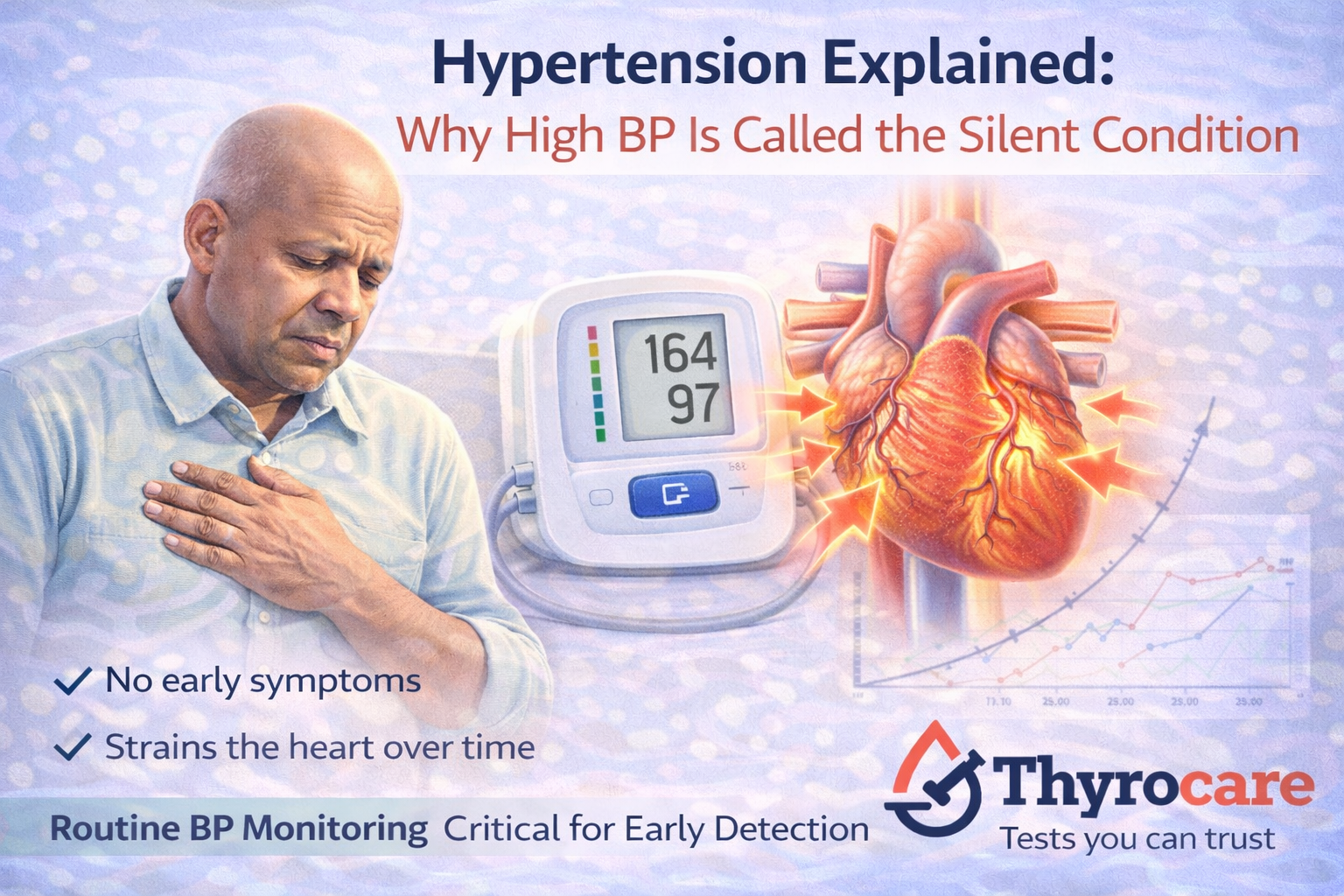
Hypertension Explained: Why High BP Is Called the Silent Condition
High blood pressure, also known as hypertension, is one of the most common health conditions worldwide—and also one of the most misunderstood. Many people associate illness with pain or visible discomfort, but hypertension often develops without noticeable symptoms. This quiet progression is why high BP is widely referred to as the “silent condition.” Despite the lack of warning signs, its impact on long-term health can be significant if left unmonitored.
What Is Blood Pressure and Why It Matters
Blood pressure measures the force with which blood pushes against the walls of the arteries as the heart pumps. When this pressure remains consistently high, it places extra strain on blood vessels and vital organs. Over time, this strain can affect how efficiently the heart and circulatory system function, even if a person feels completely normal.
Why Hypertension Often Goes Unnoticed
In the early stages, high blood pressure rarely causes discomfort. The body adapts to elevated pressure, allowing daily activities to continue without interruption. Because there is usually no pain, dizziness, or obvious signal, many people remain unaware of rising BP levels for years. Hypertension is often discovered only during routine health checks or tests done for other reasons.
How High BP Affects the Heart
When blood pressure stays elevated, the heart has to work harder to pump blood throughout the body. This ongoing effort can gradually lead to heart strain, making the heart muscle thicker and less efficient over time. Although these changes happen internally, they increase long-term cardiovascular stress, reinforcing why early awareness is important.
The Role of Routine Monitoring
Unlike conditions that announce themselves with symptoms, hypertension relies heavily on measurement for detection. Regular blood pressure monitoring helps identify trends early—before complications develop. Tracking BP over time provides a clearer picture than a single reading and supports timely medical guidance when needed.
Why Testing Supports Hypertension Awareness
Blood tests and health profiles that assess cardiovascular and metabolic markers can complement BP monitoring by offering broader insight into overall health. These parameters help doctors understand how high blood pressure may be influencing the body beyond just the numbers on a BP monitor.
Making Health Monitoring Simple
Thyrocare supports preventive health awareness through reliable testing that complements routine BP monitoring. When you book Thyrocare tests through BookMyTest, sample collection is done conveniently at home, and reports are delivered digitally within 24 to 48 hours, making regular health checks easier to maintain.
Conclusion
Hypertension earns its reputation as a silent condition because it often progresses unnoticed. Even without symptoms, high blood pressure can place ongoing strain on the heart and blood vessels. Routine monitoring and regular health testing are key tools for early awareness, helping protect long-term heart health before complications arise.
FAQs
Can high blood pressure exist without symptoms?
Yes. Many people with hypertension feel completely normal, which is why routine BP checks are important.
How often should blood pressure be monitored?
The frequency depends on individual health factors, but regular monitoring helps detect trends early.
Do blood tests help in hypertension awareness?
Yes. Blood tests provide additional insight into heart and metabolic health alongside BP readings.
Is home sample collection available for Thyrocare tests?
Yes. When booked through BookMyTest, free home sample collection is included.