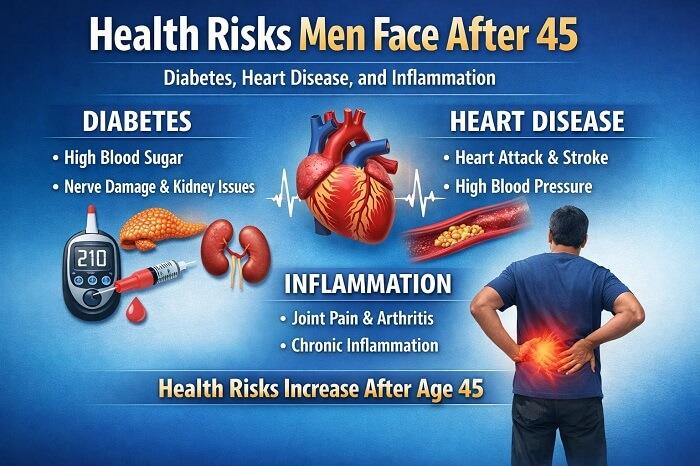
Health Risks Men Face After 45
Something shifts after 45. Not all at once. Not dramatically. But quietly. You wake up a little more tired than you used to. Your weight doesn’t respond the way it once did. That annual medical report suddenly has words like borderline, slightly high, or needs monitoring. And honestly, it can feel confusing. Or easy to brush off.
But here’s the truth: after 45, three health risks start showing up together more often than we realize—diabetes, heart disease, and chronic inflammation. And they’re deeply connected. Let’s break this down, simply.
Why Health Risks Increase After 45
As men age, the body’s ability to regulate blood sugar, cholesterol, and inflammation slowly changes. Metabolism slows. Muscle mass decreases. Hormonal balance shifts. Add modern lifestyle factors—long sitting hours, stress, irregular meals, poor sleep—and the risk compounds.
The tricky part?
These conditions often don’t cause obvious symptoms early on. That’s why many men feel “mostly fine” while problems are already developing underneath.
Diabetes: The Silent Starter
Type 2 diabetes is one of the most common conditions affecting men after 45. But it rarely starts with dramatic warning signs. Instead, it creeps in through:
- Slightly elevated fasting glucose
- Gradual insulin resistance
- Weight gain around the abdomen
- Constant fatigue that feels… normal
Left unchecked, high blood sugar damages blood vessels and nerves. And that leads us straight to heart disease.
Heart Disease: The Bigger Picture
Heart disease doesn’t happen overnight. It’s usually the result of years of metabolic imbalance.
- High blood sugar damages arteries.
- High cholesterol leads to plaque buildup.
- High blood pressure strains the heart.
Men over 45 are especially vulnerable because risk factors often overlap—diabetes, obesity, stress, and sedentary habits tend to exist together.
The dangerous part?
Many heart conditions remain silent until something serious happens.That’s why preventive screening matters more than symptom-based testing at this stage of life.
Inflammation: The Hidden Link
Here’s where things get interesting. Chronic low-grade inflammation connects diabetes and heart disease. It’s the body’s constant, low-level immune response—often triggered by poor diet, stress, smoking, lack of exercise, or untreated metabolic issues.
You won’t feel inflammation directly. But blood tests can detect it. Markers like ESR (Erythrocyte Sedimentation Rate) help identify ongoing inflammation that may be contributing to:
- Insulin resistance
- Artery damage
- Joint issues
- Fatigue and reduced immunity
Inflammation doesn’t cause disease on its own—but it accelerates everything else.
Why Basic Blood Tests Matter After 45
This is where routine tests become powerful. Simple screening parameters like:
- Fasting Glucose – to assess diabetes risk
- Haemogram – to evaluate overall blood health, anemia, and infection
- ESR (Automated) – to detect underlying inflammation
These tests act like early warning signals. They don’t diagnose everything—but they tell you when it’s time to pay attention. Ignoring them doesn’t stop disease. Catching changes early often does
Prevention Is Easier Than Treatment
Here’s the good news.When detected early, diabetes, heart disease, and inflammation are highly manageable. Lifestyle changes, timely medical advice, and regular monitoring can slow or even reverse early-stage risk.
That’s why men above 45 benefit most from comprehensive preventive health checkups—not just single tests done occasionally, but structured evaluations that look at the body as a system.
Who Should Take This Seriously?
This matters especially if you:
- Are above 45 years of age
- Have a family history of diabetes or heart disease
- Live a sedentary or high-stress lifestyle
- Experience fatigue, weight gain, or reduced stamina
- Haven’t had a detailed health checkup in the last year
Even if you feel “mostly okay.”
Health risks after 45 aren’t about fear. They’re about awareness.Diabetes, heart disease, and inflammation don’t announce themselves loudly—but they leave clues. Blood tests catch those clues early. Preventive screening connects the dots. And once you see the full picture, you can actually do something about it.
Because staying healthy after 45 isn’t about chasing youth. It’s about protecting energy, independence, and quality of life—for the years ahead.