Heavy Metal Toxicity Test
We don’t usually think about heavy metals when we talk about health. Most of us worry about cholesterol, blood sugar, or vitamin deficiencies. But here’s something many people overlook—small amounts of certain metals can quietly build up in the body over time.And the tricky part? You might not even notice it happening.
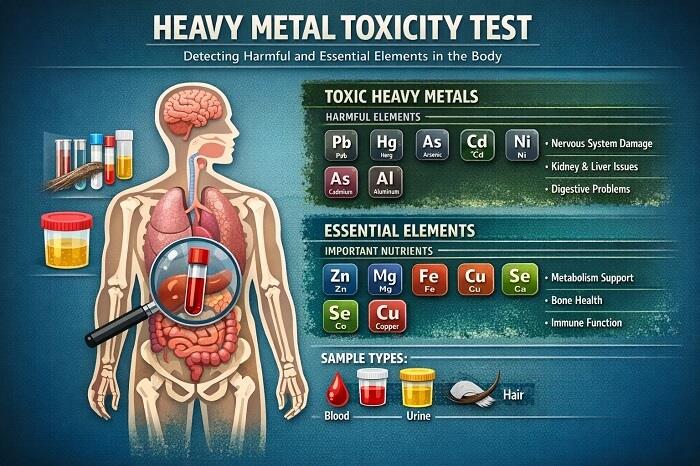
Heavy metals can enter the body through contaminated food, polluted air, drinking water, occupational exposure, or even certain household products. While some metals like iron, zinc, and copper are essential in small amounts, others such as lead, mercury, arsenic, and cadmium can become toxic when they accumulate. This is where a Heavy Metal Toxicity Test becomes valuable—it helps detect both harmful metals and essential elements to evaluate overall health and exposure risks.
What Is a Heavy Metal Toxicity Test?
A heavy metal toxicity test is a laboratory screening that measures the levels of various metals present in the body. These tests are usually performed using blood or urine samples to identify abnormal concentrations of metals.
The purpose of the test is twofold. First, it detects toxic metals that may harm organs and biological processes. Second, it measures essential trace elements that the body needs for normal functioning but can also become harmful if present in excessive amounts. Advanced diagnostic laboratories use precise analytical techniques to measure these elements at very small concentrations, allowing doctors to identify potential exposure or toxicity before serious symptoms develop.
Harmful Metals That May Affect Health
Several metals are known to cause health complications when they accumulate in the body. A heavy metal toxicity test commonly screens for the following elements:
- Lead: Exposure to lead can affect the nervous system, kidneys, and blood formation. It may lead to fatigue, abdominal discomfort, and neurological symptoms.
- Mercury: Mercury toxicity can impact the brain, kidneys, and immune system. Long-term exposure may cause memory problems, coordination issues, and nerve damage.
- Arsenic: Often linked to contaminated water sources, arsenic exposure may cause digestive problems, skin changes, and long-term organ damage.
- Cadmium: Found in industrial environments and cigarette smoke, cadmium can accumulate in the kidneys and bones, potentially leading to kidney dysfunction and bone weakness.
Detecting these metals early helps prevent long-term health complications and supports timely medical intervention.
Essential Elements the Body Needs
Interestingly, not all metals are harmful. Some trace elements play vital roles in maintaining normal physiological functions.
- Iron supports red blood cell production and oxygen transport in the body.
- Zinc helps strengthen immunity and supports wound healing.
- Copper contributes to enzyme activity and energy production.
- Selenium acts as an antioxidant that protects cells from oxidative damage.
However, even essential elements must remain within a balanced range. Too little can lead to deficiency, while excessive levels may also cause toxicity. Heavy metal testing helps maintain this delicate balance by identifying abnormal levels of both toxic and essential elements.
Symptoms That May Indicate Metal Toxicity
Heavy metal exposure often develops gradually, and symptoms can vary depending on the metal involved and the duration of exposure. Some individuals may experience:
- Persistent fatigue or weakness
- Headaches or difficulty concentrating
- Digestive discomfort or nausea
- Numbness or tingling sensations
- Skin changes or unexplained allergies
- Memory problems or mood changes
These symptoms can sometimes mimic other health conditions, which is why laboratory testing is essential for accurate diagnosis.
Who Should Consider a Heavy Metal Toxicity Test?
Certain individuals may be at higher risk of heavy metal exposure and may benefit from periodic screening.
People working in industrial environments, mining, manufacturing, or chemical processing may encounter higher levels of metal exposure. Individuals living in areas with environmental pollution or contaminated water sources may also be at risk. In addition, people experiencing unexplained chronic symptoms or neurological issues may be advised by healthcare providers to undergo heavy metal testing. Preventive health checkups may also include such tests to evaluate long-term exposure and nutritional balance.
Benefits of Early Detection
Detecting heavy metal exposure early can significantly reduce health risks. Once abnormal levels are identified, doctors can recommend appropriate interventions such as reducing exposure sources, dietary adjustments, or medical treatments designed to eliminate excess metals from the body. Early diagnosis helps prevent damage to critical organs such as the brain, kidneys, and liver. It also helps healthcare providers monitor environmental or occupational risks more effectively. Regular testing can provide reassurance and help individuals maintain a balanced internal environment.
Heavy metals, whether toxic or essential, play an important role in overall health when maintained within safe levels. However, environmental exposure, occupational hazards, and lifestyle factors can sometimes lead to imbalances that affect the body. A Heavy Metal Toxicity Test provides valuable insights into these hidden exposures by detecting both harmful metals and essential elements. Through early identification and proper monitoring, individuals can take proactive steps to protect their health and prevent long-term complications. Understanding what’s happening inside the body is the first step toward maintaining balance—and heavy metal testing offers a powerful tool for achieving that goal.