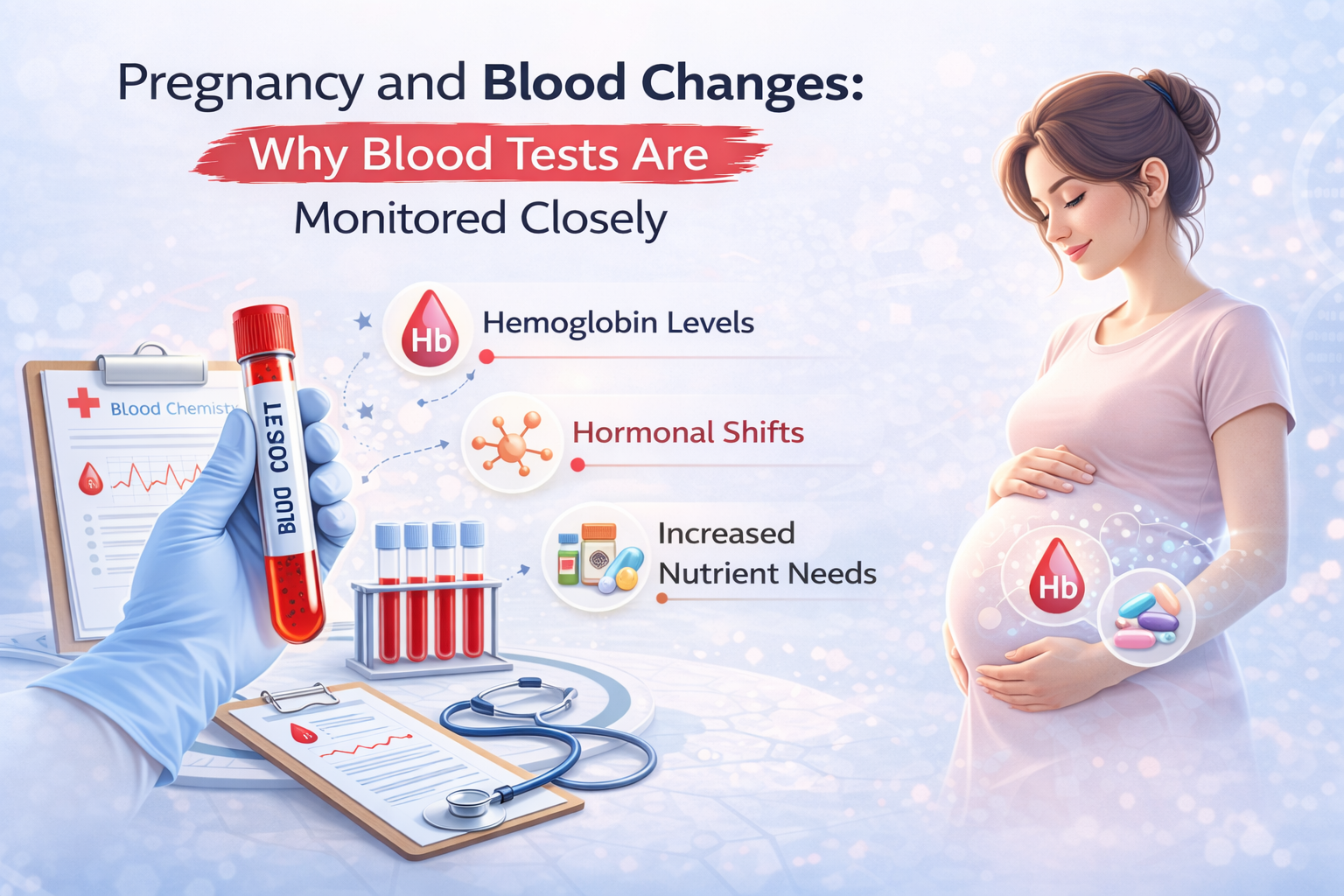
Pregnancy and Blood Changes: Why Blood Tests Are Monitored Closely
Pregnancy is a time of profound physiological transformation. As the body prepares to support the growth and development of a baby, several internal systems adjust to meet increased nutritional, metabolic, and circulatory demands. Among these changes, blood chemistry undergoes significant shifts, which is why routine blood tests become an essential part of prenatal care.
Monitoring blood markers helps healthcare providers track both maternal health and fetal development throughout pregnancy.
Changes in Blood Volume
During pregnancy, the total blood volume in the body increases significantly. This increase supports the growing fetus by ensuring a steady supply of oxygen and nutrients through the placenta.
However, the rise in plasma volume can dilute certain blood components, particularly hemoglobin. This dilution may lead to lower hemoglobin readings, which is why regular monitoring helps ensure that oxygen delivery remains adequate.
Hormonal Influences on Blood Chemistry
Pregnancy hormones such as estrogen and progesterone influence several metabolic and circulatory processes. These hormones help regulate blood flow, fluid balance, and nutrient transport to the developing baby.
Hormonal changes may also influence blood sugar regulation and immune responses, which is why certain metabolic markers are often monitored during pregnancy.
Increased Nutrient Requirements
Pregnancy significantly increases the demand for key nutrients such as iron, folate, vitamin B12, and calcium. These nutrients support fetal growth, brain development, and the formation of red blood cells.
Routine blood tests help evaluate nutrient levels and identify deficiencies early so they can be addressed promptly.
The Importance of Regular Monitoring
Because pregnancy involves dynamic biological changes, periodic blood testing provides valuable insight into maternal health. Monitoring hemoglobin levels, nutrient markers, and metabolic indicators ensures that both mother and baby receive the support they need.
Preventive Monitoring with Thyrocare
Thyrocare offers comprehensive diagnostic testing that evaluates metabolic markers and nutrient levels. When you book a Thyrocare blood test through BookMyTest, convenient home sample collection is available and reports are delivered digitally within 24–48 hours.
Conclusion
Pregnancy alters blood chemistry in several ways, including changes in hemoglobin levels, hormone activity, and nutrient requirements. Routine blood tests play an important role in monitoring these changes and supporting healthy pregnancy outcomes.
FAQs
Why are blood tests important during pregnancy?
Blood tests help monitor hemoglobin levels, nutrient status, and metabolic markers that support maternal and fetal health.
Can pregnancy affect hemoglobin levels?
Yes. Increased blood volume during pregnancy may influence hemoglobin concentration.
How can pregnancy-related blood markers be monitored?
A Thyrocare blood test can evaluate key health indicators during pregnancy.
Is Thyrocare home sample collection available?
Yes. Thyrocare home sample collection allows convenient testing at home.
When are Thyrocare blood test reports delivered?
Most Thyrocare blood test reports are delivered within 24–48 hours.