The Science Behind Seasonal Allergies: Why Timing Matters
Seasonal allergies are among the most common types of allergic reactions, yet their timing often confuses people. Symptoms may appear only during specific months and disappear at other times of the year. This pattern is closely linked to environmental factors and how the immune system responds to them.
Understanding the timing behind seasonal allergies helps explain why symptoms follow predictable cycles.
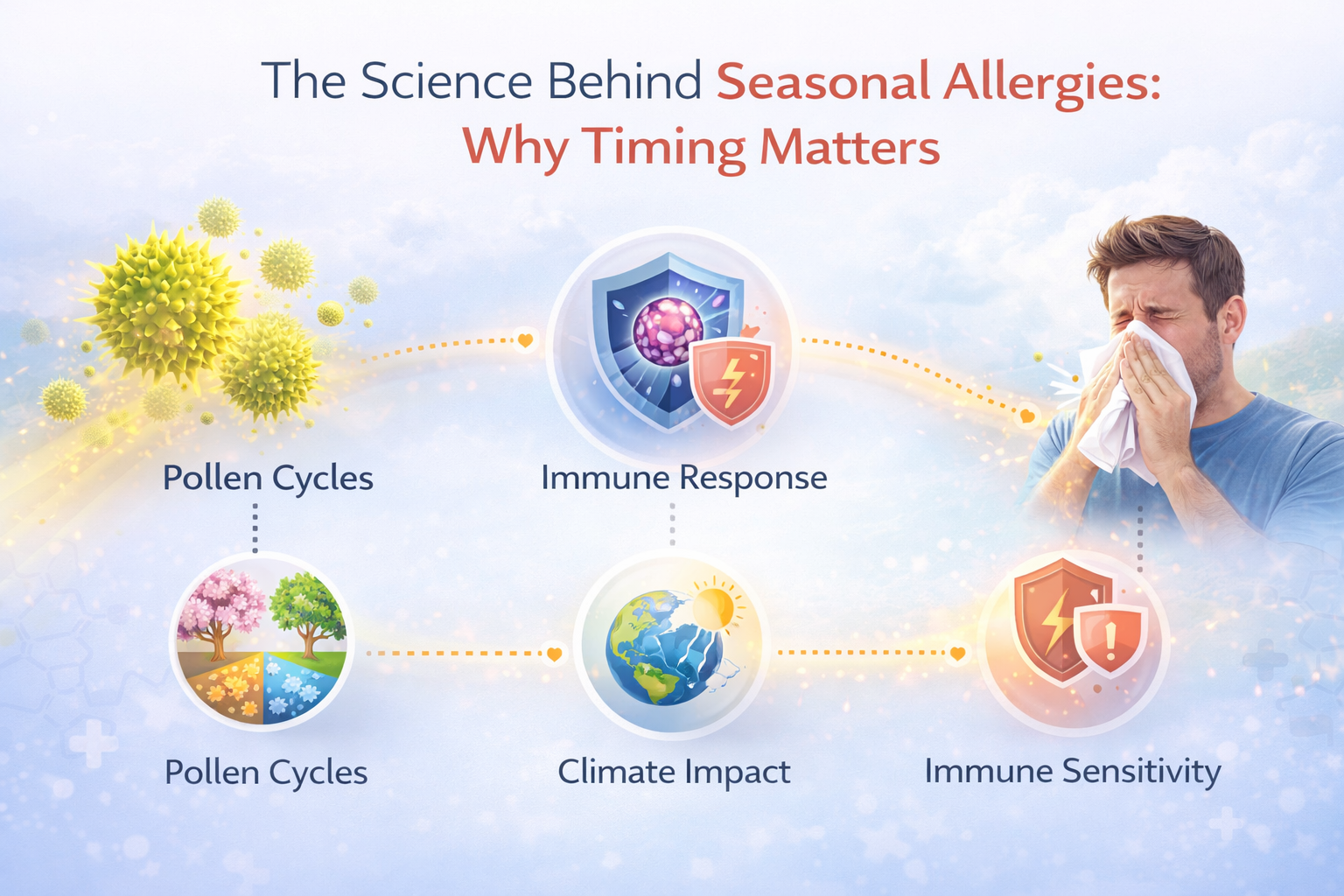
The Role of Pollen and Environmental Triggers
Seasonal allergies are often triggered by airborne substances such as pollen released by trees, grasses, and weeds. These particles vary depending on the time of year.
Different plants release pollen during specific seasons, which is why symptoms may peak during certain months.
How the Immune System Reacts
In individuals with seasonal allergies, the immune system identifies harmless substances like pollen as threats. This triggers the release of histamine and other chemicals, leading to symptoms such as sneezing, congestion, and irritation.
This reaction is not harmful in itself, but it reflects an overactive immune response.
Why Timing Changes Each Year
Seasonal patterns can vary slightly each year depending on climate conditions such as temperature, rainfall, and pollution levels. These factors influence when plants release pollen.
This explains why allergy symptoms may begin earlier or last longer in certain years.
Environmental Exposure and Sensitivity
Repeated exposure to seasonal allergens can increase sensitivity over time. Individuals may notice changes in symptom intensity depending on exposure levels and environmental conditions.
Preventive Monitoring with Thyrocare
Thyrocare provides diagnostic testing that helps evaluate immune and metabolic markers. Booking a Thyrocare blood test through BookMyTest ensures convenient home collection and timely reports.
Conclusion
Seasonal allergies are closely linked to environmental cycles and immune system responses. Understanding these patterns helps explain why symptoms appear at specific times and highlights the importance of monitoring overall health.
FAQs
What causes seasonal allergies?
Seasonal allergies are caused by environmental allergens such as pollen.
Why do allergies occur at certain times of the year?
Different plants release pollen during specific seasons, triggering immune responses.
Can a Thyrocare blood test help monitor allergy-related health markers?
A Thyrocare blood test can evaluate immune-related indicators.
Is Thyrocare home sample collection available?
Yes. Thyrocare home sample collection allows convenient testing.
How fast are Thyrocare reports delivered?
Most Thyrocare blood test reports are delivered within 24–48 hours.