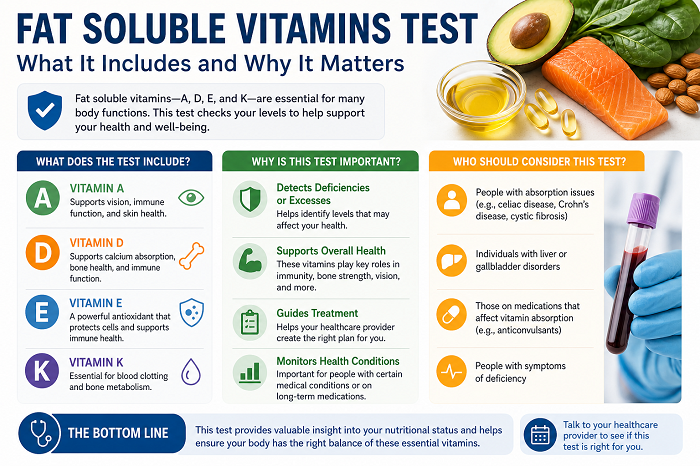
Fat Soluble Vitamins Test Guide
Vitamins are essential for maintaining overall health, but not all vitamins behave the same way in the body. Some dissolve in water and are excreted quickly, while others are stored in body fat and the liver. These are known as fat-soluble vitamins—specifically Vitamin A, Vitamin D, Vitamin E, and Vitamin K. Because they are stored in the body, both deficiency and excess can impact health. This is where a Fat Soluble Vitamins Test becomes important.
What Is a Fat Soluble Vitamins Test?
The Fat Soluble Vitamins Test is a blood test that measures the levels of key fat-soluble vitamins in your body. Unlike single vitamin tests, this panel evaluates multiple nutrients together, providing a broader understanding of your nutritional status.
Since these vitamins are stored rather than quickly eliminated, imbalances can build up over time. This test helps detect both deficiencies and excess levels, allowing for timely intervention.
What Does the Test Include?
A typical Fat Soluble Vitamins Test includes the following components:
- Vitamin A (Retinol): Supports vision, immune function, and skin health. Low levels may cause night blindness, while excess can lead to toxicity.
- Vitamin D: Essential for calcium absorption, bone strength, and immune support. Deficiency is common and linked to weak bones and fatigue.
- Vitamin E: Acts as an antioxidant, protecting cells from damage and supporting skin and immune health.
- Vitamin K: Plays a key role in blood clotting and bone metabolism. Low levels may increase bleeding risk.
Together, these vitamins are critical for maintaining multiple body systems, including bones, immunity, vision, and cardiovascular health.
Why Is This Test Important?
Fat-soluble vitamins accumulate in the body, which makes monitoring their levels essential. Unlike water-soluble vitamins, excess intake of fat-soluble vitamins can lead to toxicity. At the same time, deficiencies can cause serious health issues if left untreated.
The Fat Soluble Vitamins Test helps identify imbalances early. For example, low Vitamin D levels are extremely common and may lead to bone weakness, while excessive Vitamin A intake can affect liver health. By detecting these issues early, the test supports better health management and prevents complications.
Who Should Consider This Test?
You may benefit from a Fat Soluble Vitamins Test if you experience symptoms such as fatigue, bone pain, frequent infections, or vision problems. It is also recommended for individuals with:
- Poor or unbalanced diet
- Limited sun exposure
- Digestive disorders affecting fat absorption
- Long-term medication use
- Chronic health conditions
It is also useful as part of routine preventive health checkups.
Procedure and Report Time
The Fat Soluble Vitamins Test is a simple blood test. A sample is collected from a vein, and in some cases, fasting may be recommended depending on the lab protocol.
Results are usually available within 24–48 hours, providing a clear overview of your vitamin levels.
Benefits of Early Detection
Taking this test offers several advantages:
- Identifies vitamin deficiencies before symptoms worsen
- Detects excess levels that may lead to toxicity
- Supports personalized diet and supplement planning
- Improves bone health, immunity, and overall well-being
Regular monitoring helps maintain the right balance of essential nutrients in the body.
Maintaining the right levels of fat-soluble vitamins is essential for long-term health. Because these vitamins are stored in the body, both deficiency and excess can have lasting effects.
The Fat Soluble Vitamins Test provides a comprehensive way to evaluate these nutrients and take proactive steps toward better health. Whether you are experiencing symptoms or simply want to stay on top of your wellness, this test is a valuable tool for preventive care.