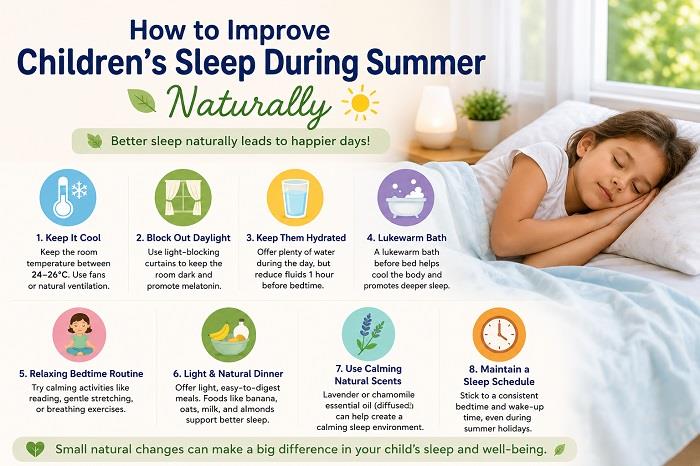
Improve Childrens Sleep in Summer
Summer vacations are exciting for children, but the hot weather, irregular routines, increased screen time, and late-night activities can often disturb their sleep patterns. Good sleep is essential for children’s physical growth, brain development, immunity, mood, and overall health. Poor sleep during summer can lead to irritability, fatigue, reduced concentration, and weakened immunity.
Parents often notice that children sleep late, wake up tired, or struggle to fall asleep during hot summer nights. Fortunately, a few simple lifestyle and bedtime adjustments can naturally improve sleep quality and help children stay healthy and active throughout the season.
Why Children Face Sleep Problems During Summer
Several factors contribute to sleep disturbances in children during summer months:
- Hot and humid weather
- Longer daylight hours
- Irregular vacation schedules
- Increased mobile or TV screen time
- Reduced physical activity during the day
- Consumption of sugary drinks and junk food
These changes can affect the body’s natural sleep cycle and make it harder for children to get restful sleep.
Importance of Good Sleep for Children
Sleep plays a major role in healthy growth and development. During deep sleep, the body repairs tissues, supports brain function, and strengthens the immune system.
- Benefits of Healthy Sleep in Children
- Better concentration and memory
- Improved mood and emotional balance
- Stronger immunity
- Healthy growth and development
- Increased energy levels during the day
Consistent and quality sleep is essential for maintaining overall well-being in growing children.
Natural Ways to Improve Children’s Sleep During Summer
Maintain a Consistent Bedtime Routine
Even during vacations, children should follow a regular sleep schedule. Going to bed and waking up at the same time daily helps regulate the body clock naturally. A calming bedtime routine may include:
- Reading a story
- Taking a lukewarm bath
- Listening to soft music
- Avoiding stimulating activities before bed
Consistency helps children fall asleep more easily.
Keep the Bedroom Cool and Comfortable
Hot temperatures can disturb sleep quality. Make the sleeping environment comfortable by:
- Using light cotton clothing and bedsheets
- Ensuring proper ventilation
- Using fans or air conditioning if needed
- Keeping lights dim at bedtime
A cool environment helps the body relax and promotes better sleep.
Reduce Screen Time Before Bed
Mobile phones, tablets, and television screens emit blue light, which can interfere with melatonin production — the hormone responsible for sleep. Experts recommend avoiding screens at least one hour before bedtime. Instead, encourage quiet activities like drawing, storytelling, or reading books.
Encourage Physical Activity During the Day
Children who stay physically active during the day usually sleep better at night. Outdoor games, cycling, swimming, or simple exercises can help release energy naturally.
However, intense physical activity should be avoided close to bedtime, as it may make children more alert.
Focus on Healthy Hydration and Diet
Proper hydration is essential during summer, but avoid excessive sugary drinks or caffeinated beverages in the evening.
Sleep-Friendly Foods for Children
- Milk
- Bananas
- Nuts
- Whole grains
- Light homemade meals
Avoid heavy, spicy, or junk foods late at night, as they may cause discomfort and disturb sleep.
Limit Afternoon Naps
Long afternoon naps can make it difficult for children to fall asleep at night. Short naps earlier in the day are generally better if needed.
Maintaining a balance between daytime rest and nighttime sleep is important for healthy sleep patterns.
Signs Your Child May Not Be Getting Enough Sleep
Parents should pay attention to symptoms such as:
- Frequent irritability or mood swings
- Daytime sleepiness
- Difficulty concentrating
- Hyperactivity
- Low energy levels
Persistent sleep issues may affect school performance and overall health.
When to Seek Medical Advice
Occasional sleep disturbances during summer are common, but if a child consistently struggles with sleep, snores heavily, or experiences breathing difficulties during sleep, medical evaluation may be necessary. Underlying issues such as allergies, stress, nutritional deficiencies, or sleep disorders may contribute to poor sleep quality.
Healthy sleep is essential for a child’s growth, immunity, and emotional well-being. During summer, simple lifestyle changes such as maintaining a bedtime routine, reducing screen time, staying hydrated, and creating a cool sleeping environment can naturally improve sleep quality.
Parents play a key role in building healthy sleep habits that support overall wellness. By encouraging good sleep practices early, children can enjoy a healthier, happier, and more energetic summer.